

Learning Methods9 min
Can't Start Studying? Procrastination Is a Design Problem
Procrastination is not weak will: vague tasks pile up decision costs. Shrink the first action to one flashcard and let FSRS decide what to study.
Adult memory struggles come mostly from conditions: fragmented time, interference, and rusty retrieval. How to redesign studying and use the adult advantage.
Three months out is the last window where spaced repetition works at full power. The 90-day reverse plan: card everything, hunt weak points, then past papers.
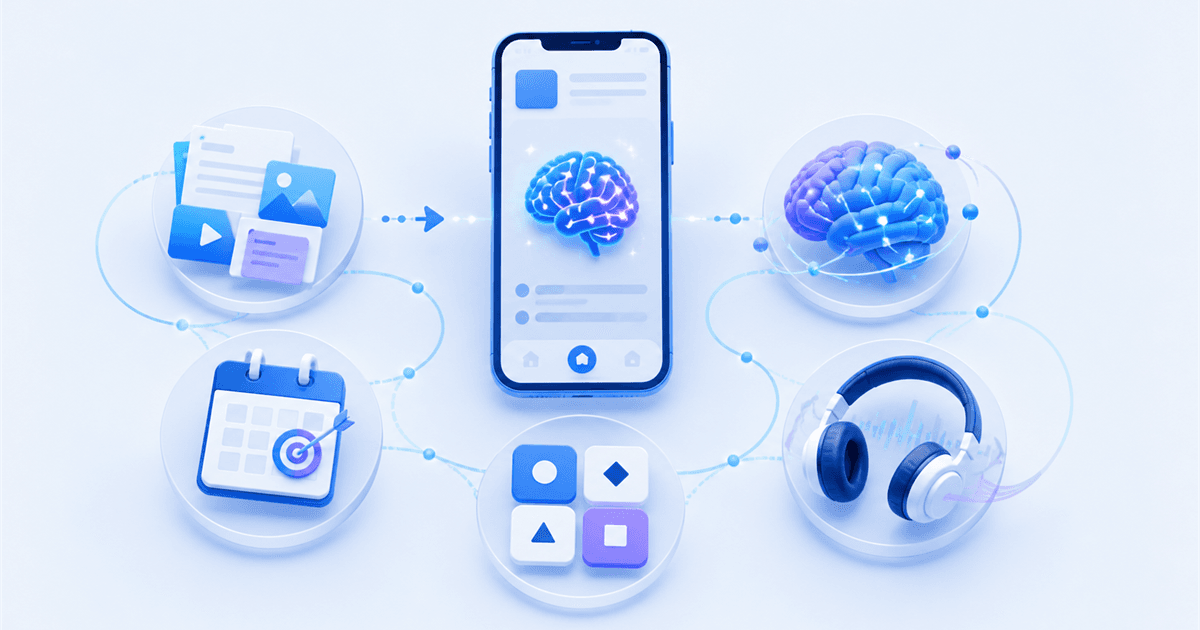
Memly 2.0 turns study materials into flashcards with artificial intelligence (AI), finds cards you may forget, plans exam reviews, and tracks progress.
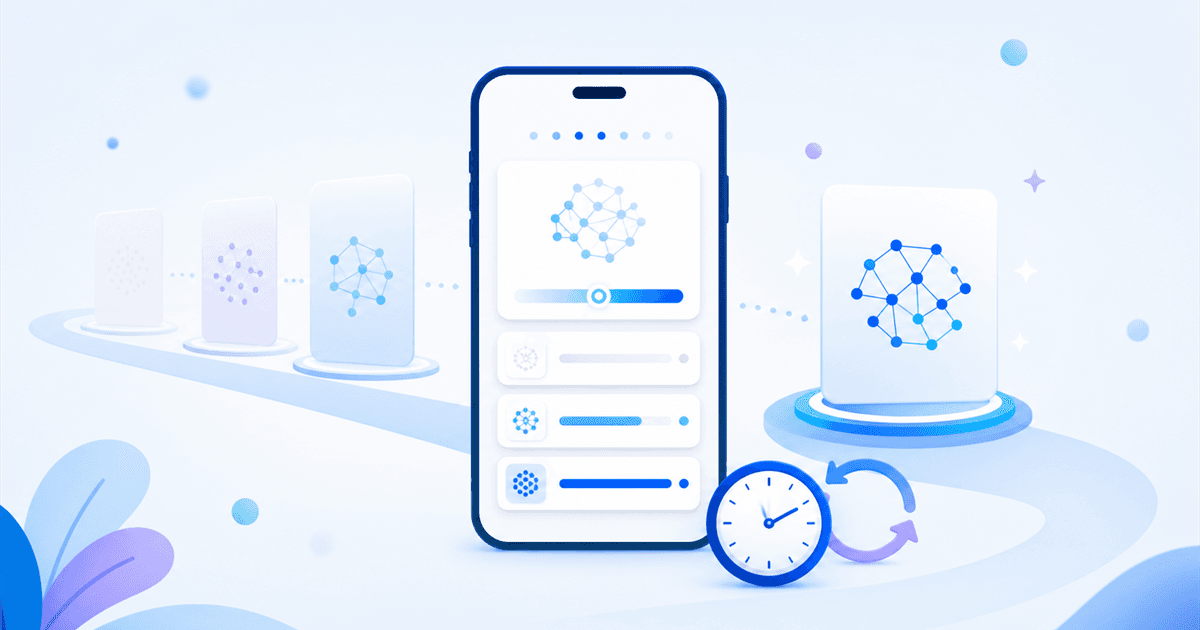
Find cards that Memly estimates you are less than 90% or 80% likely to remember, then use the dashboard and card library to decide what to review first.
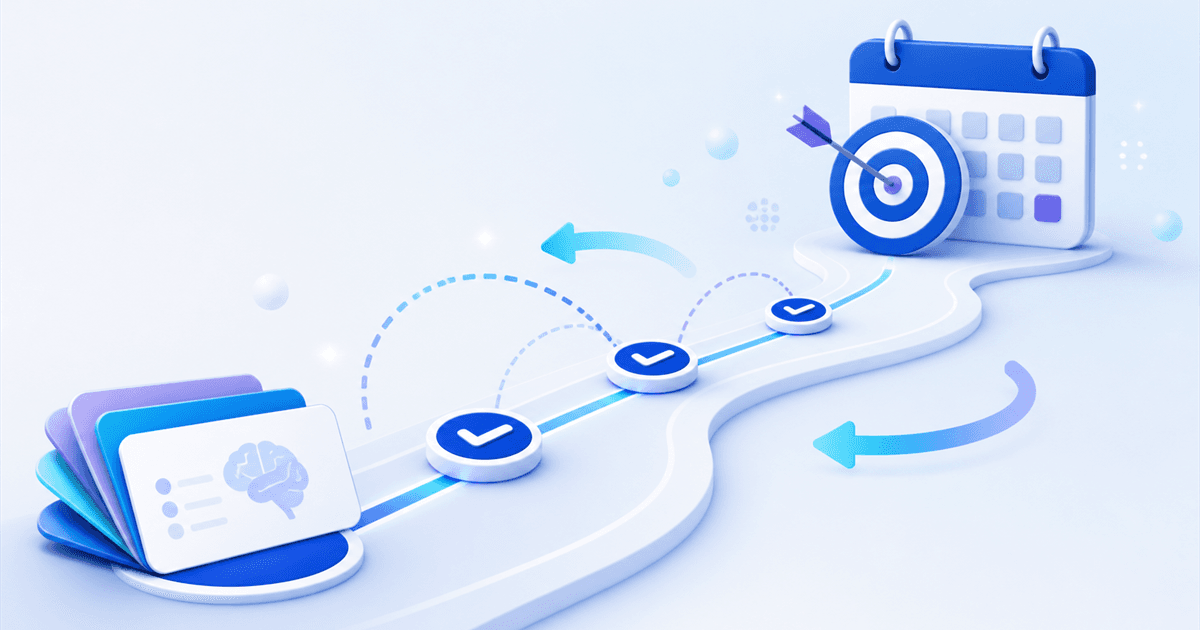
Add your exam date and choose how likely you want to be to remember each group of cards. Memly brings reviews forward and focuses on cards you may forget by exam day.
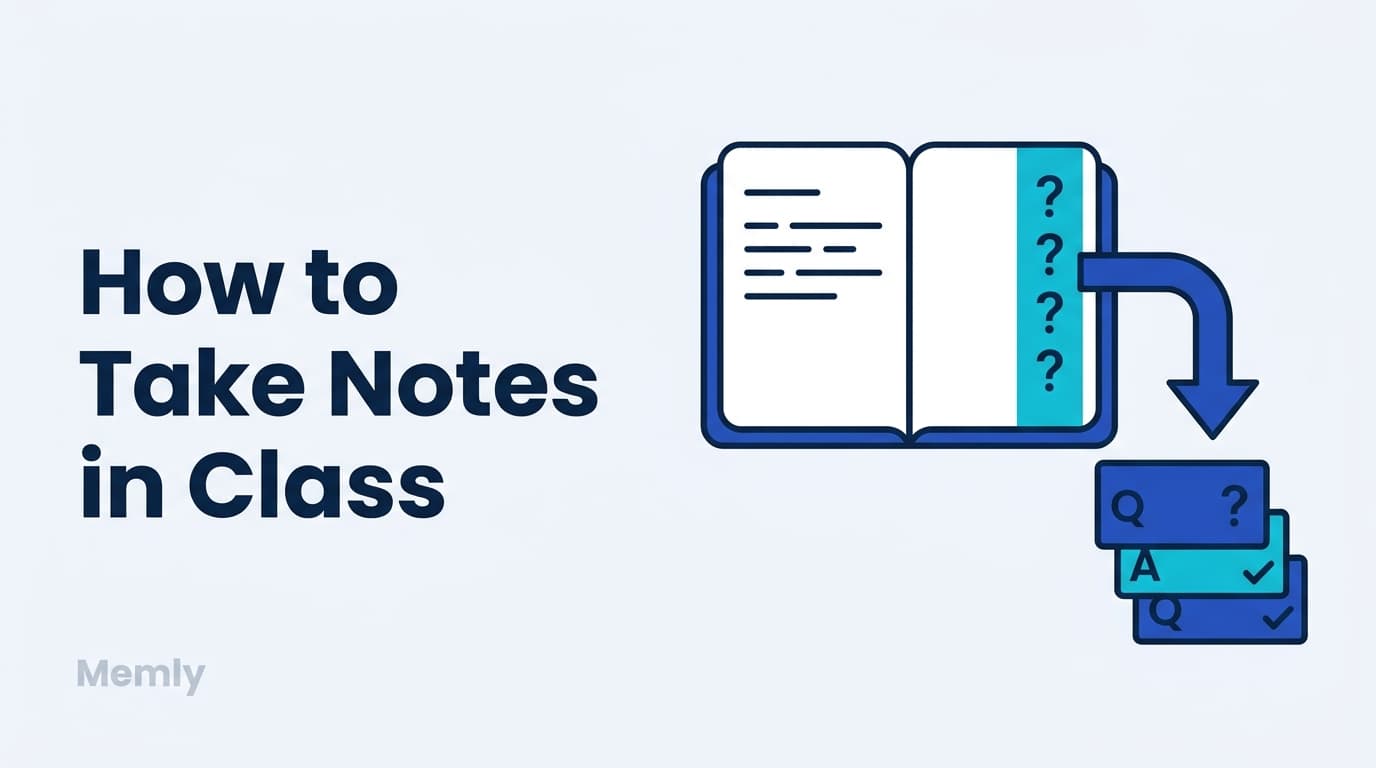
Notes are scaffolding for retrieval, not a transcript. What to capture in class, what to skip, and the 10-minute card conversion that makes notes stick.
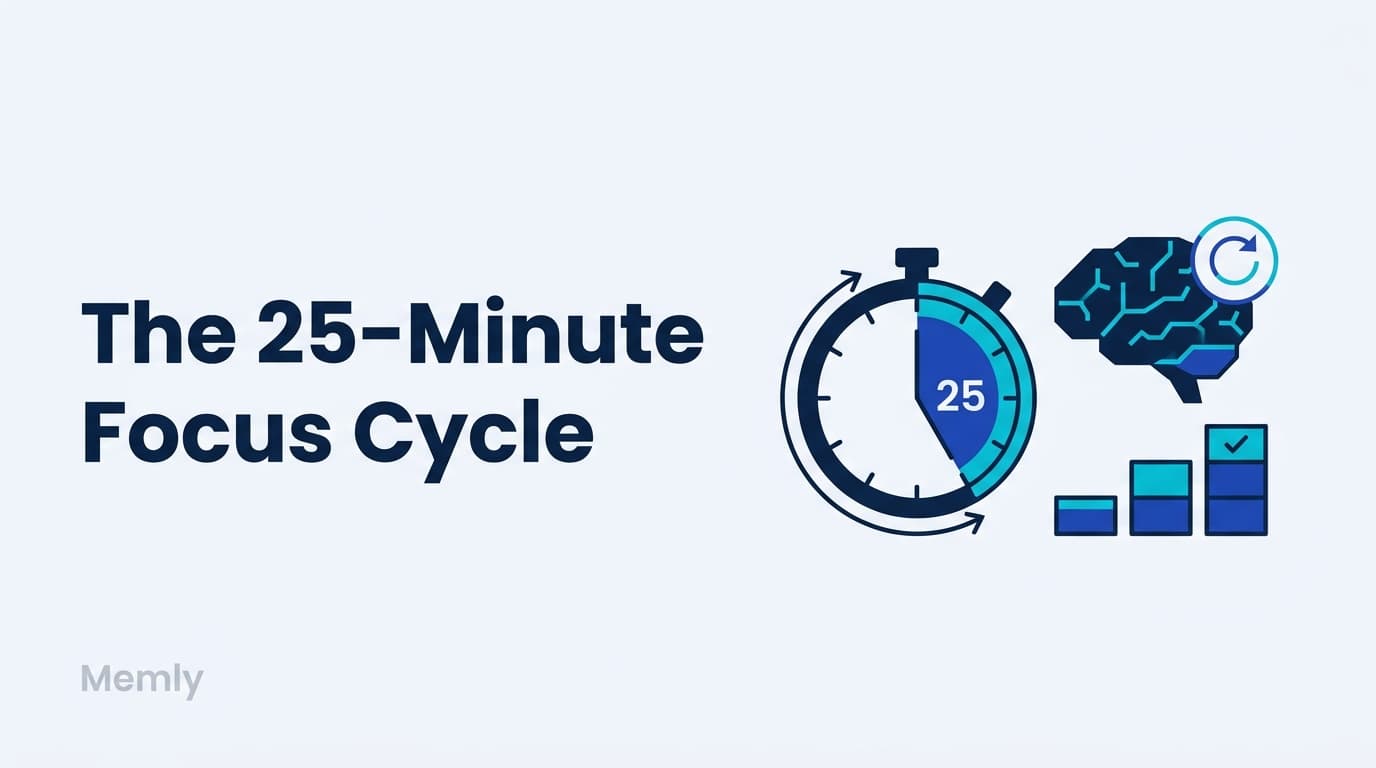
Attention depletes and rereading takes over. Split study into 25-minute cycles that open with a two-minute recall warmup, so every cycle starts in active mode.
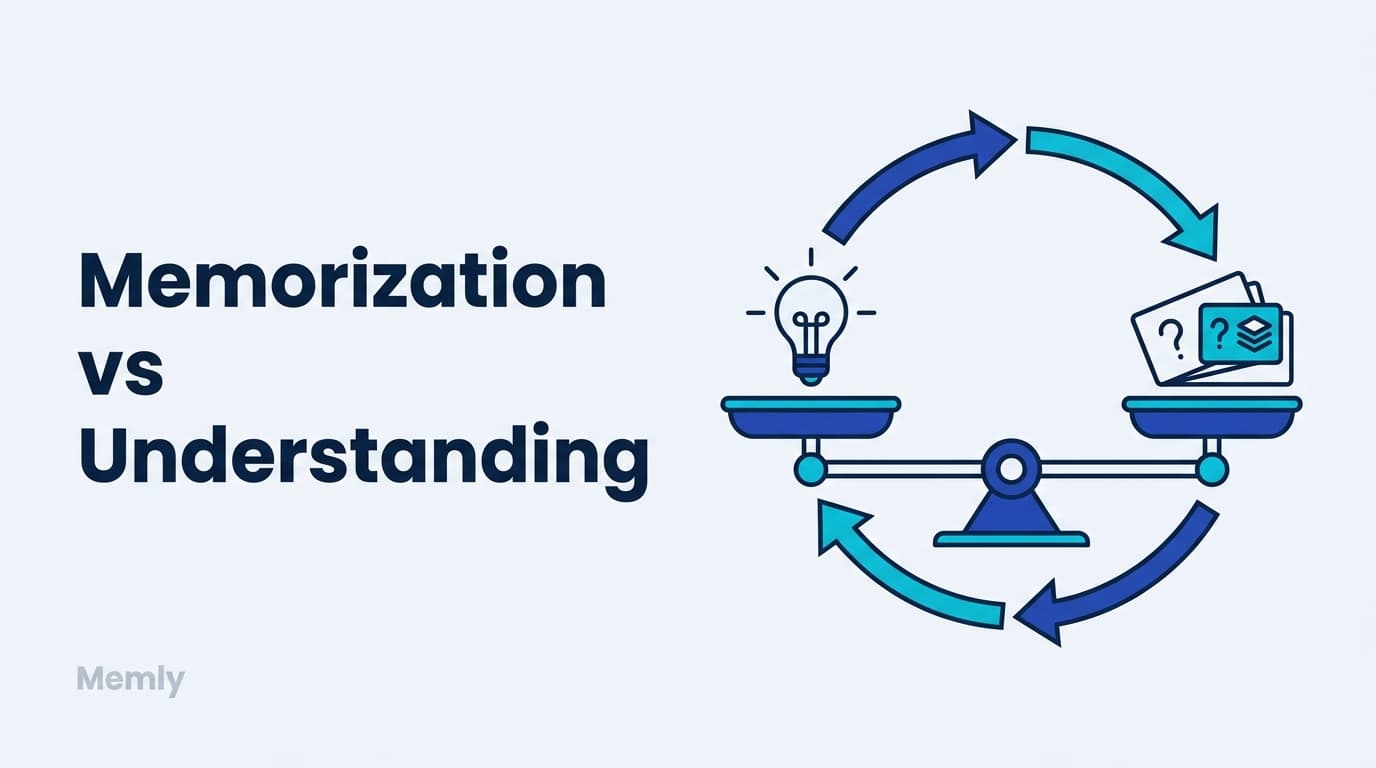
Rote collapses on applied questions; understanding alone evaporates. The four-step loop of understand, encode, recall, and use, with the right mix per subject.
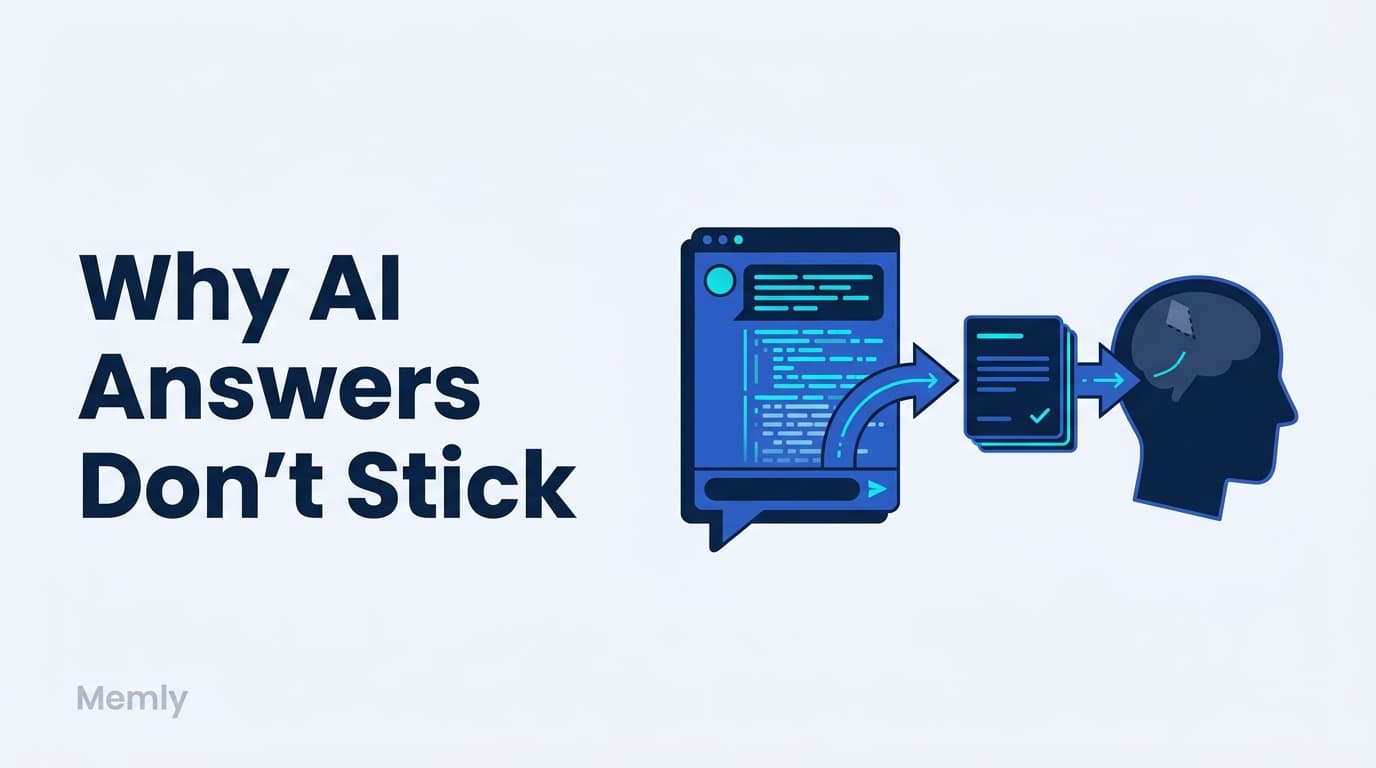
AI explains anything in seconds, yet a week later you can't explain it unaided. Why the fluency illusion is to blame, and the close-the-loop fix with flashcards.
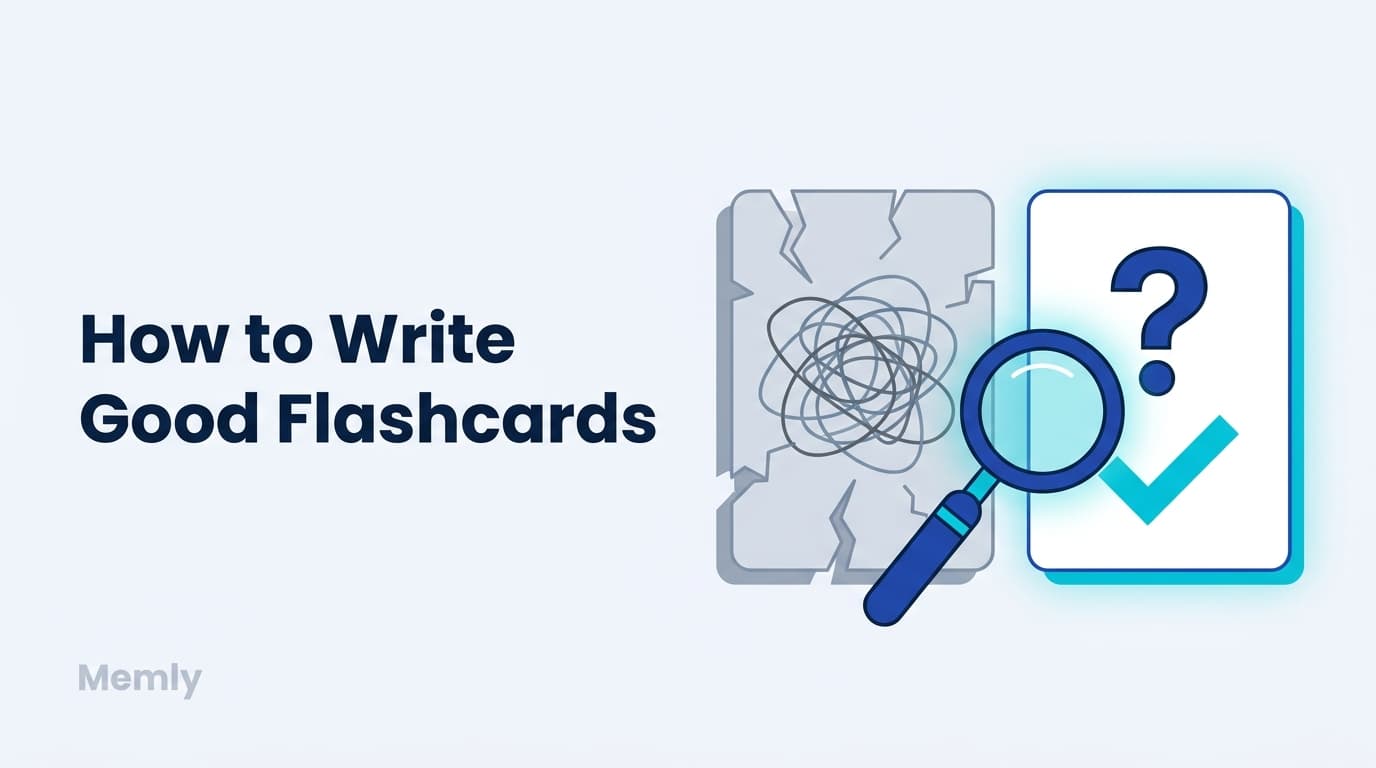
Same app, different results: the card decides. Six rules with before-and-after fixes, plus a one-minute quality check for AI-generated cards.
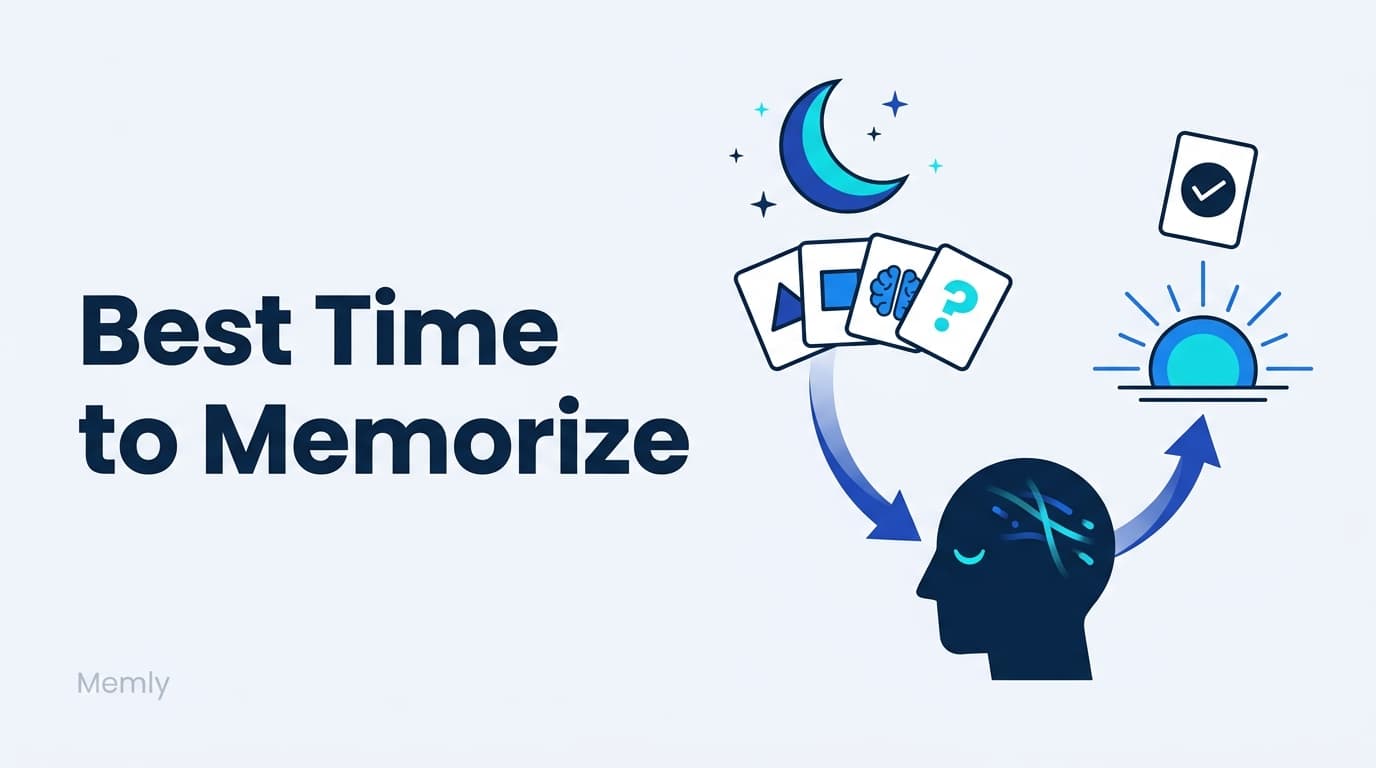
When you memorize matters. Sleep consolidation makes before-bed the golden slot: learn cards at night, recall-test them in the morning, and let FSRS do the rest.
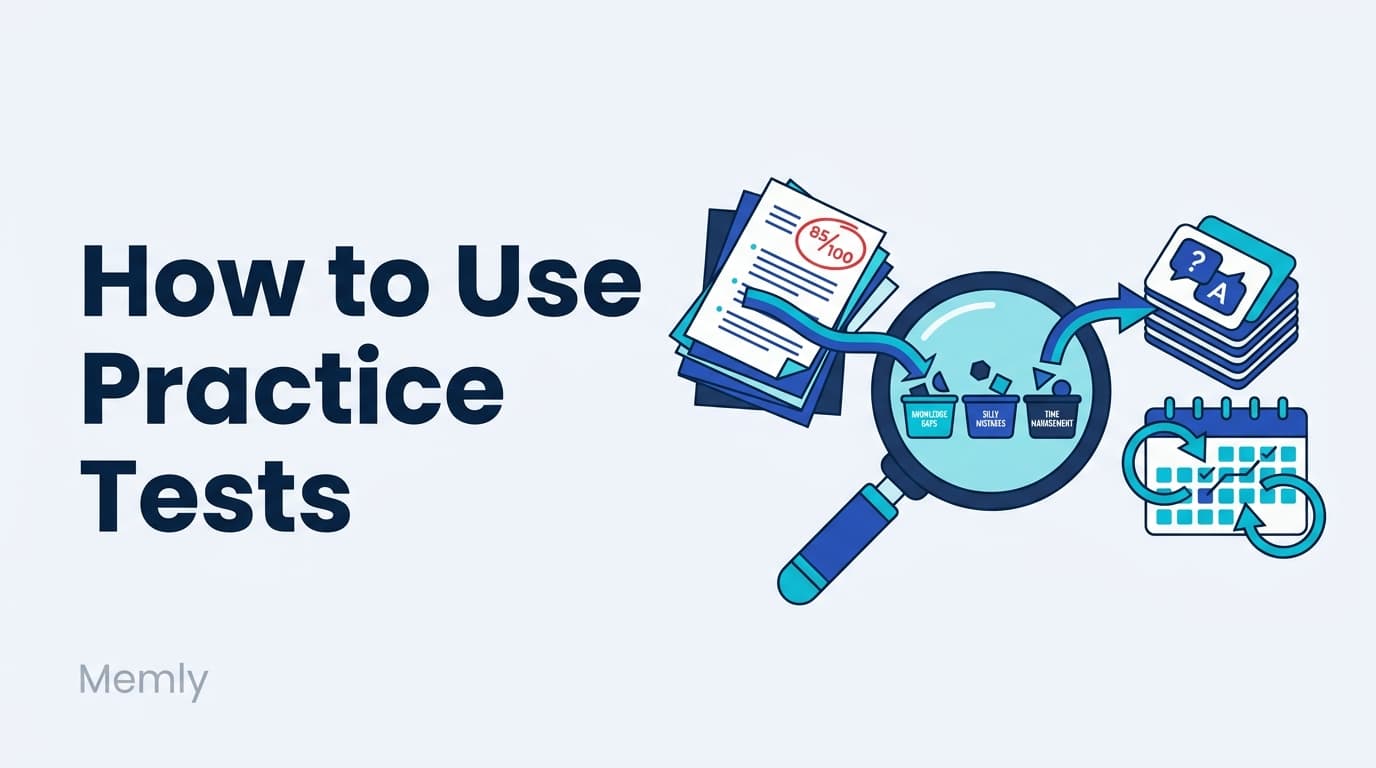
Practice tests are retrieval practice at its purest, but reading explanations is rereading in disguise. The five-step protocol that turns misses into memory.
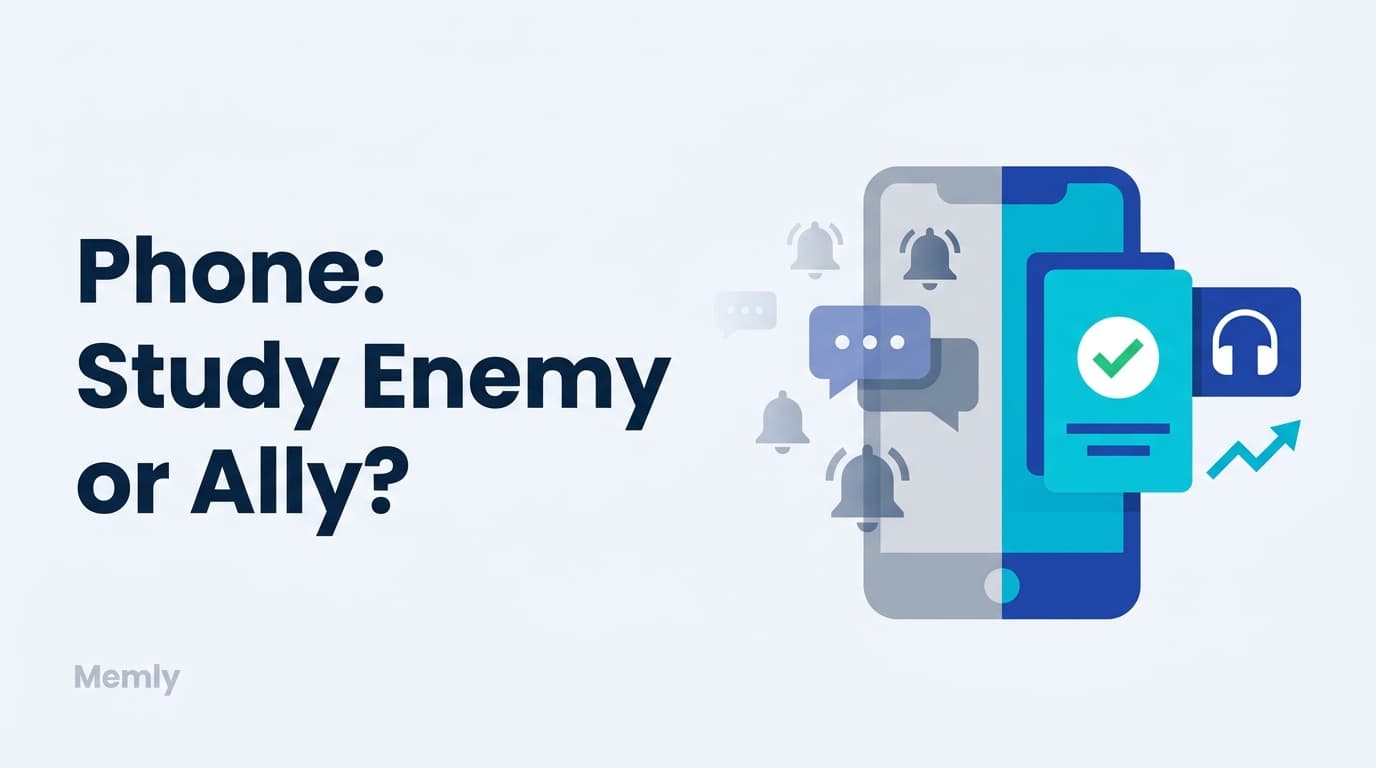
Your phone drains focus just by being visible. Guard deep study time with environment design, then turn the phone into a flashcard and audio-review machine.
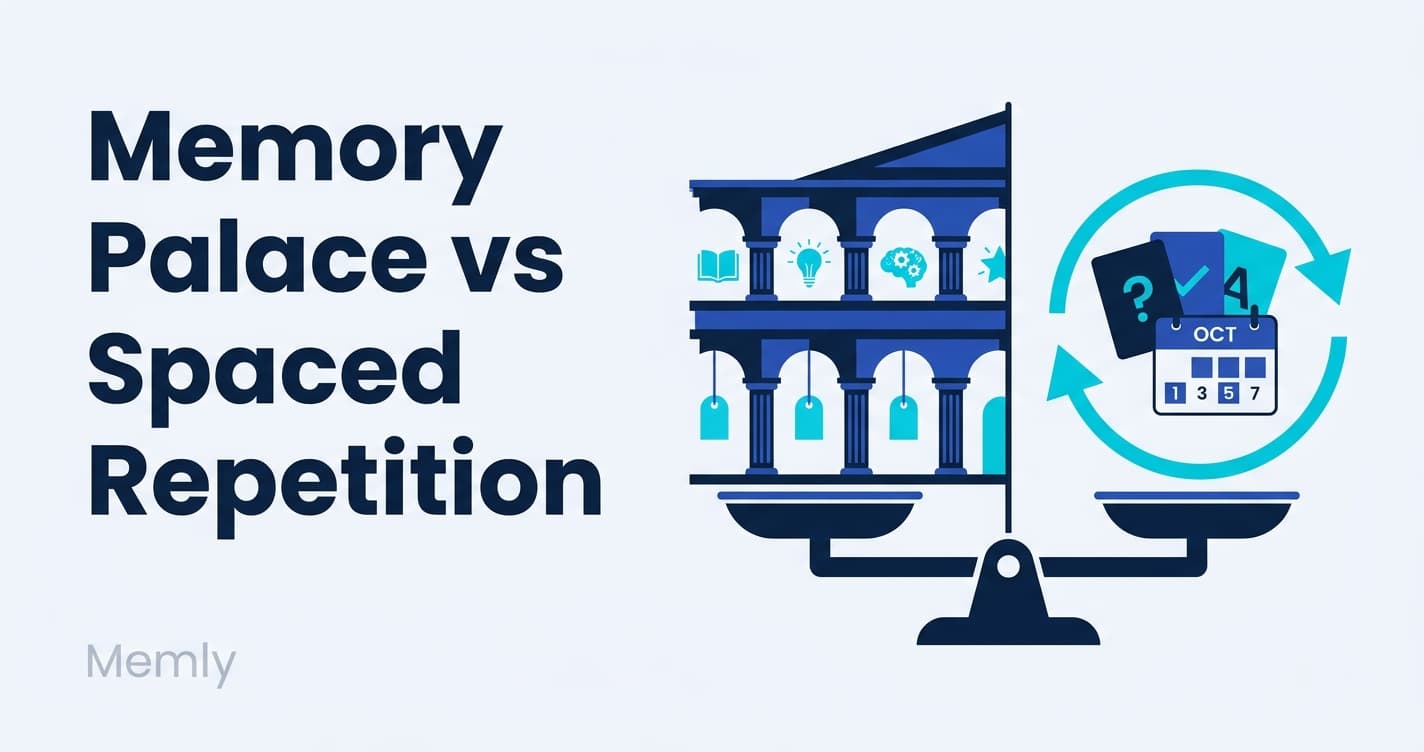
What the memory palace is genuinely good at, why spaced repetition carries exam prep, and the combined workflow: mnemonics for stubborn cards, FSRS for the rest.
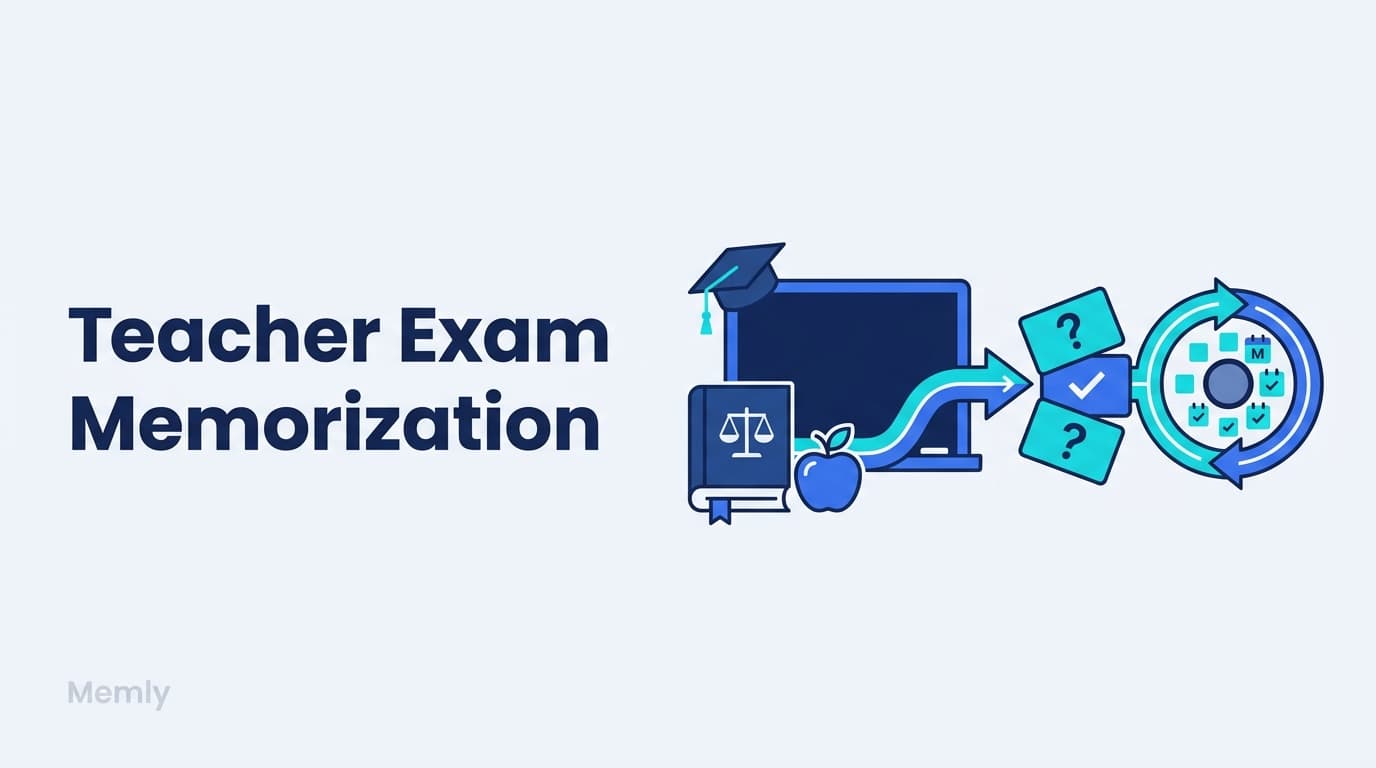
Certification exams are won by owning high-frequency domains, not reading cover to cover. Triage with past papers, card laws and theorists, maintain with FSRS.
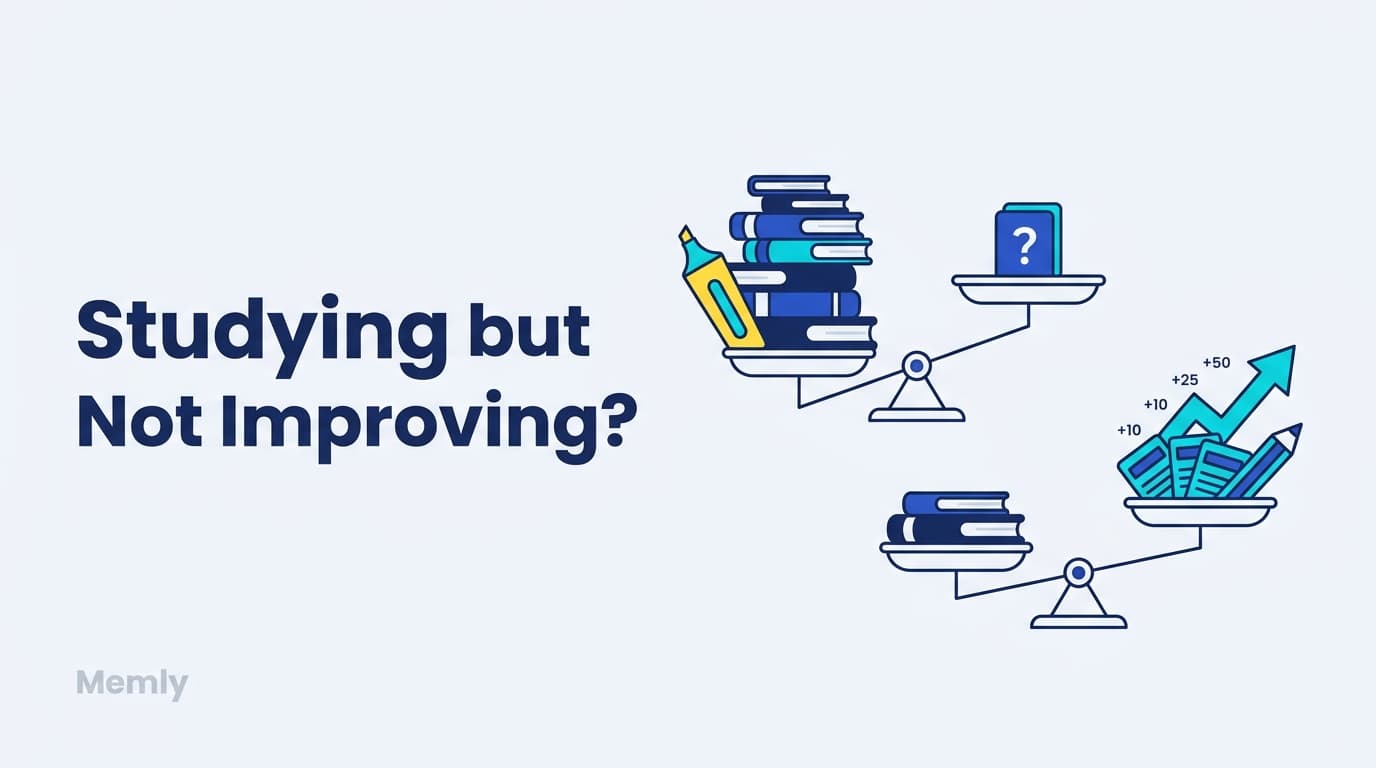
If the hours are there but grades are not, your study time is mostly low-utility input. A five-question self-diagnosis and a retrieval-first restructure.
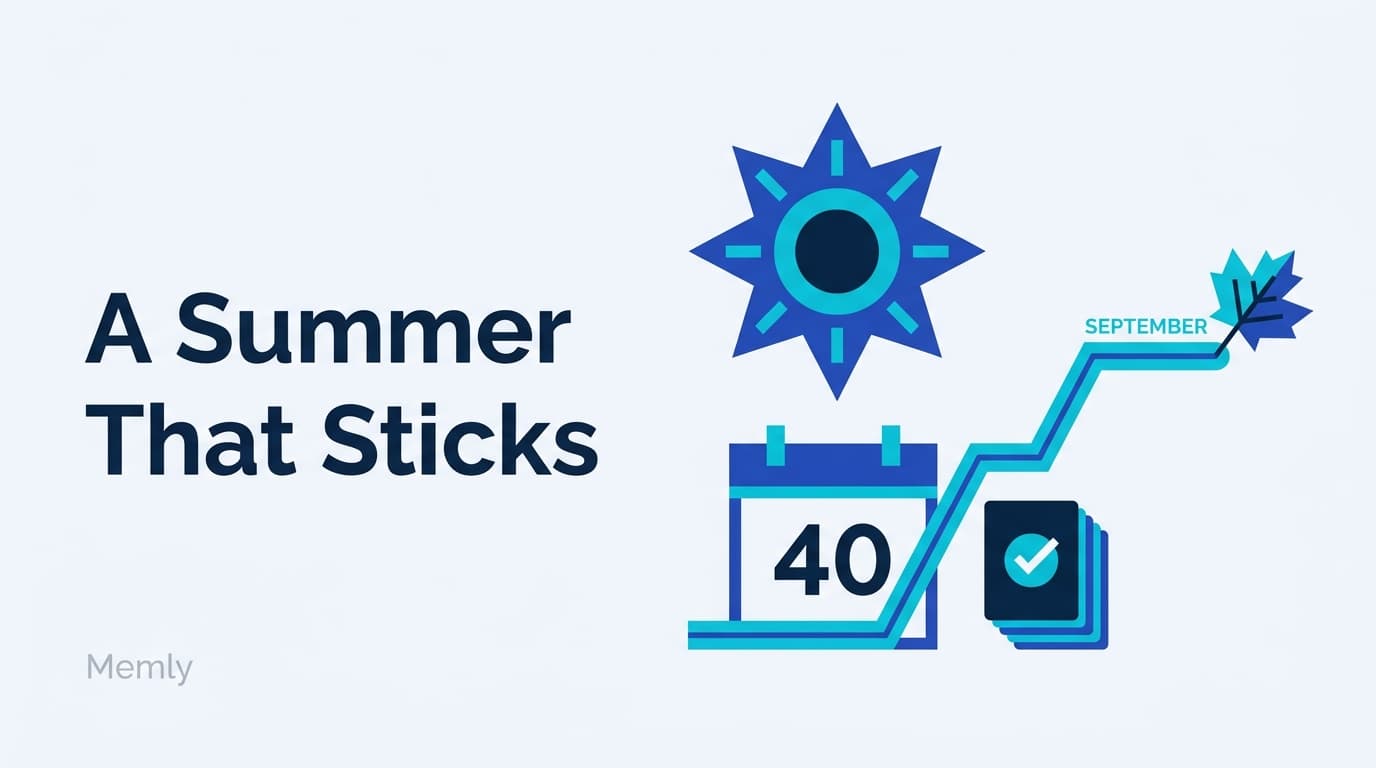
320 hours of summer studying can vanish by September. The two-phase 40-day plan: card everything same day, review 15 minutes daily, then switch to output.
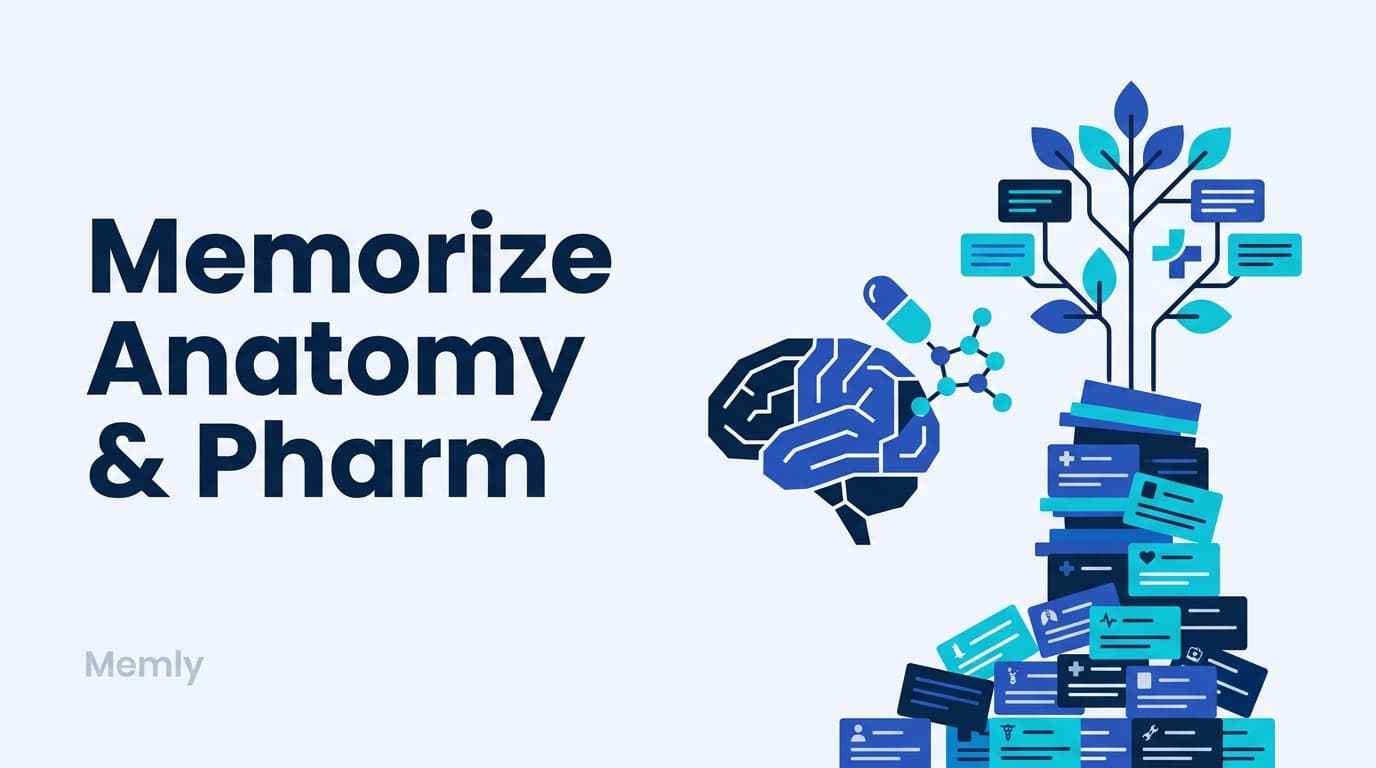
Thousands of anatomy and pharmacology facts collapse under brute force. Structure by system, encode by mechanism, and let FSRS manage the review schedule.
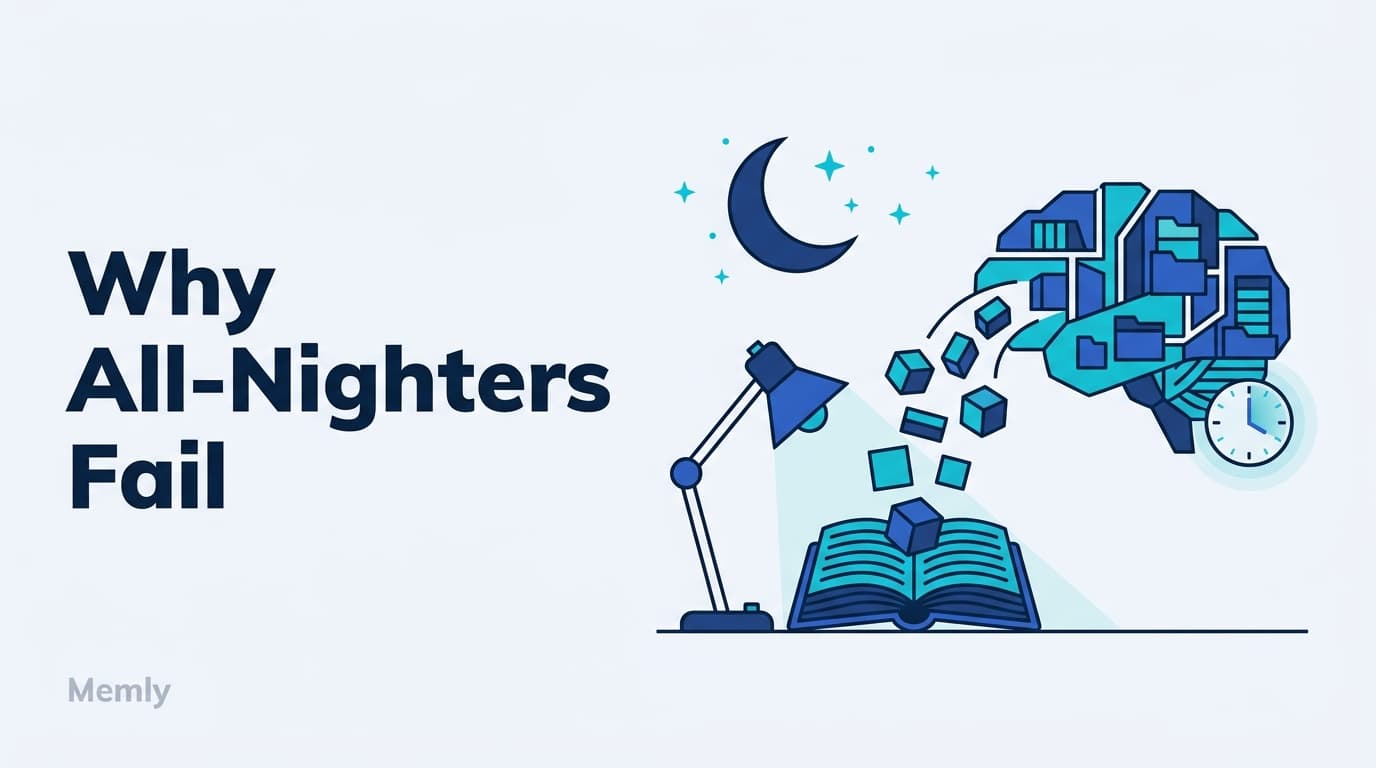
Crammed memories vanish because consolidation happens during sleep. Why all-nighters evaporate within a week, and the narrow-recall-sleep protocol instead.
Struggling to memorize is a method gap, not a memory gap. The three principles that work: meaningful encoding, retrieval practice, and spaced review.
Three days before the exam and nowhere near done? Rereading is the fastest way to lose points. A day-by-day cram plan built on triage, retrieval practice, and sleep, with AI flashcards turning your textbook into recall practice in seconds.
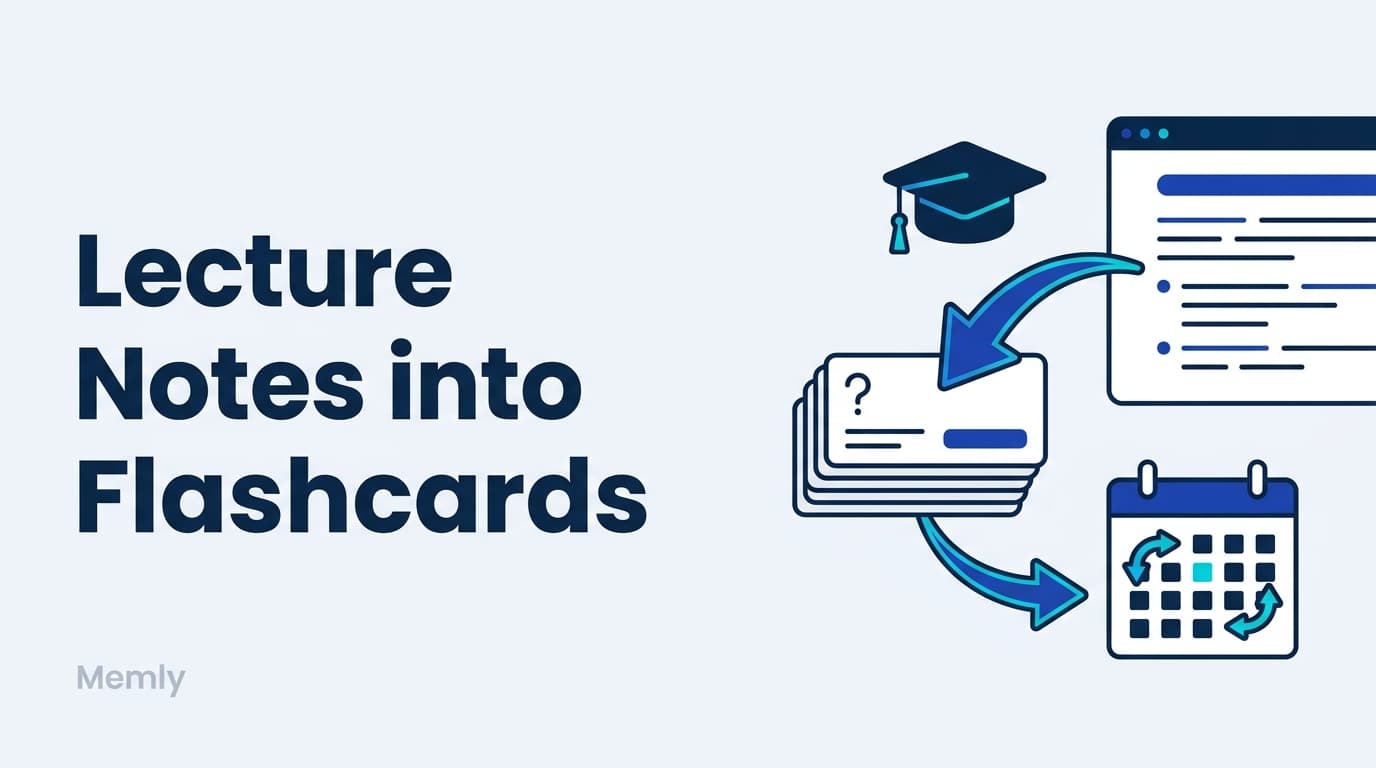
Your lecture notes read like a stranger's by finals week. Capture notes or slide PDFs on lecture day, let AI convert them into flashcards, and review with spaced repetition. Ten minutes per lecture replaces the pre-exam all-nighter.
You read the chapter three times and remember nothing. That is not a bad memory; it is the fluency illusion. The science of recognition vs recall, the retrieval reading loop, and how spaced repetition turns reading into memory that lasts.
Microsoft CEO Satya Nadella's view on companies in the age of AI, in plain words: the learning loop, human capital, and token capital. Plus why you need your own learning loop, and how to build one with Memly.
AI agents made you more productive, but what you can do grew while what you are did not. AI extends your output, not your mind. Here is why learning with AI matters now, and how Memly turns your AI conversations into knowledge that sticks.
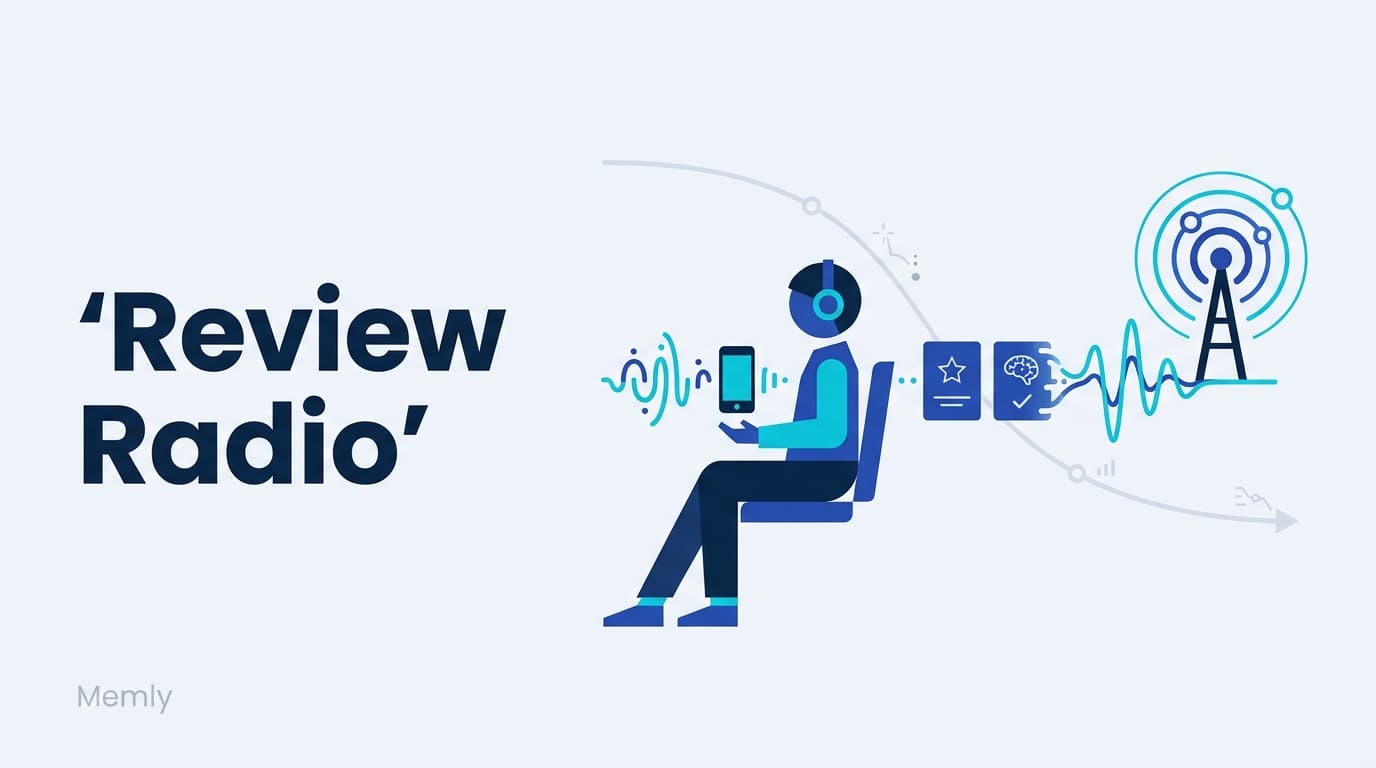
Memly's Review Radio turns your due flashcards into a hands-free, two-host audio podcast for your commute, walk, or workout. See how it works and how to use it.
Does audio learning work? Passive listening is weak, but audio with retrieval and spacing works. The science of active recall and the learning-styles myth.
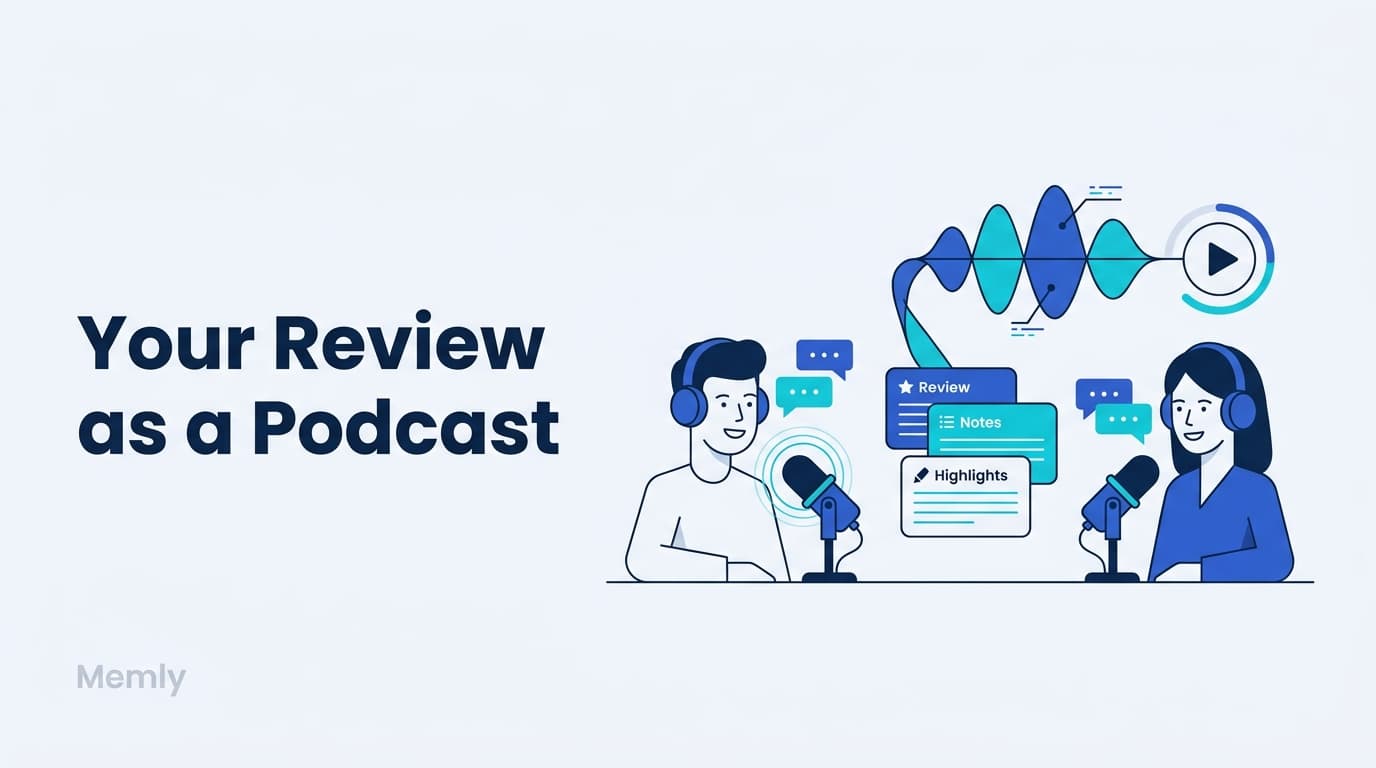
Love NotebookLM's Audio Overview? It's great for understanding documents but not daily review. How a forgetting-curve study podcast complements it — use both.
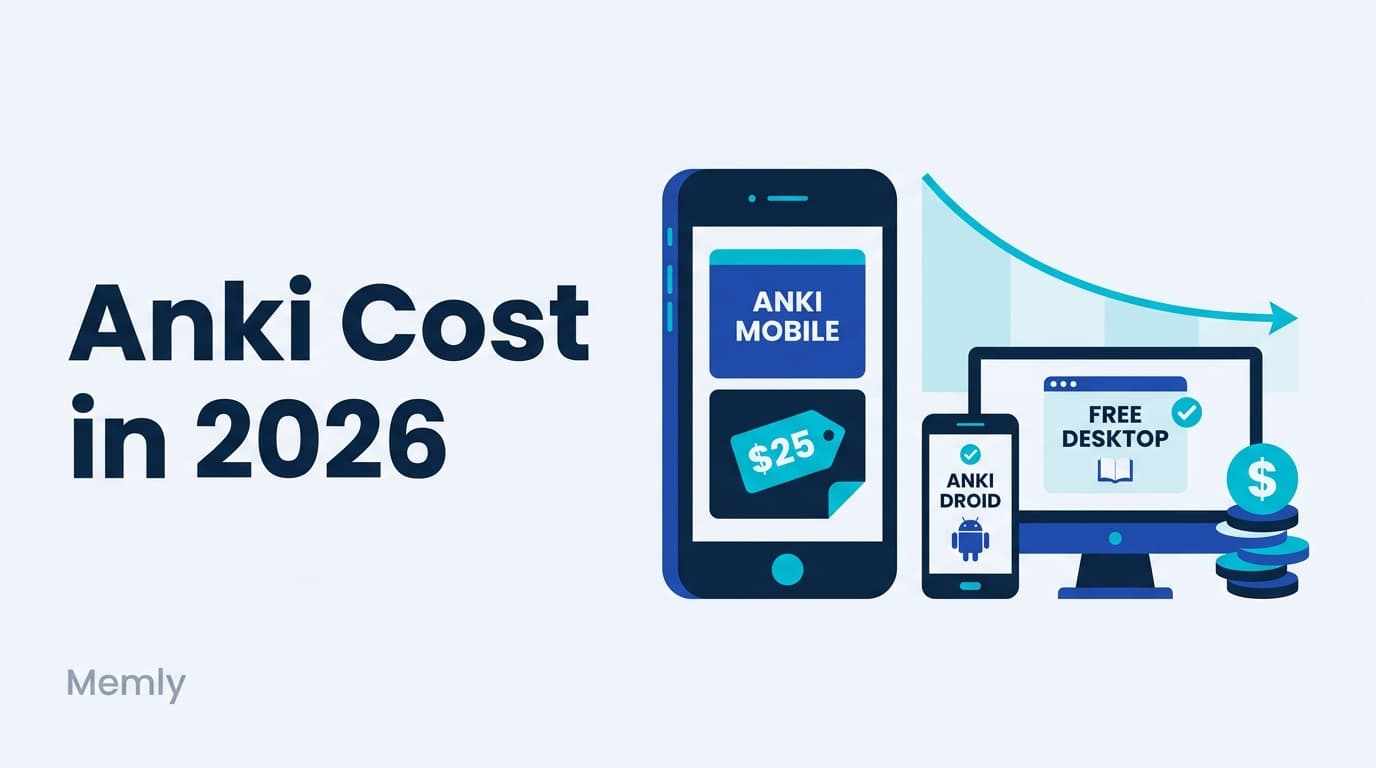
Anki cost 2026 explained: free on desktop and Android, ~$25 one-time on iPhone (AnkiMobile). See the real total cost plus a free AI alternative.
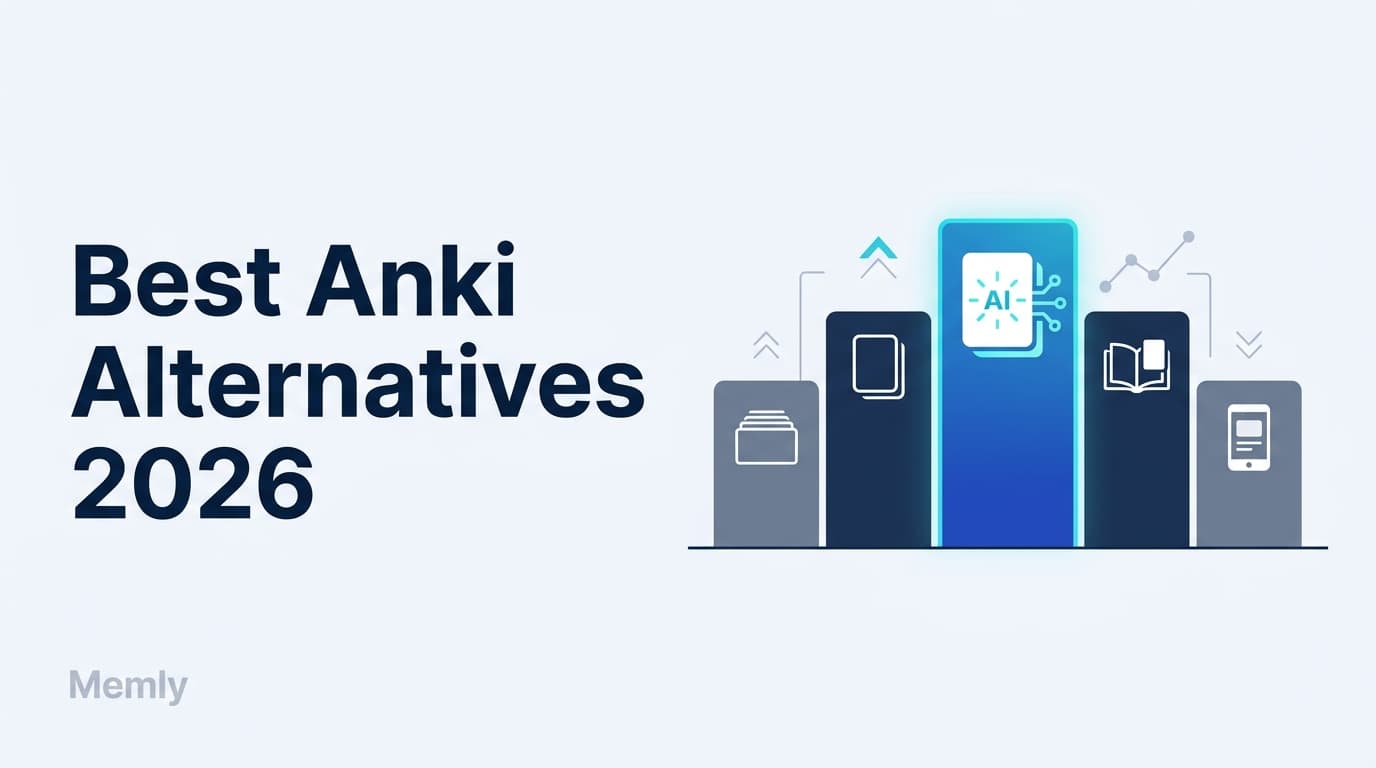
The best Anki alternative in 2026: 5 AI-powered flashcard apps compared on AI generation, FSRS scheduling, price, and who each one actually fits.
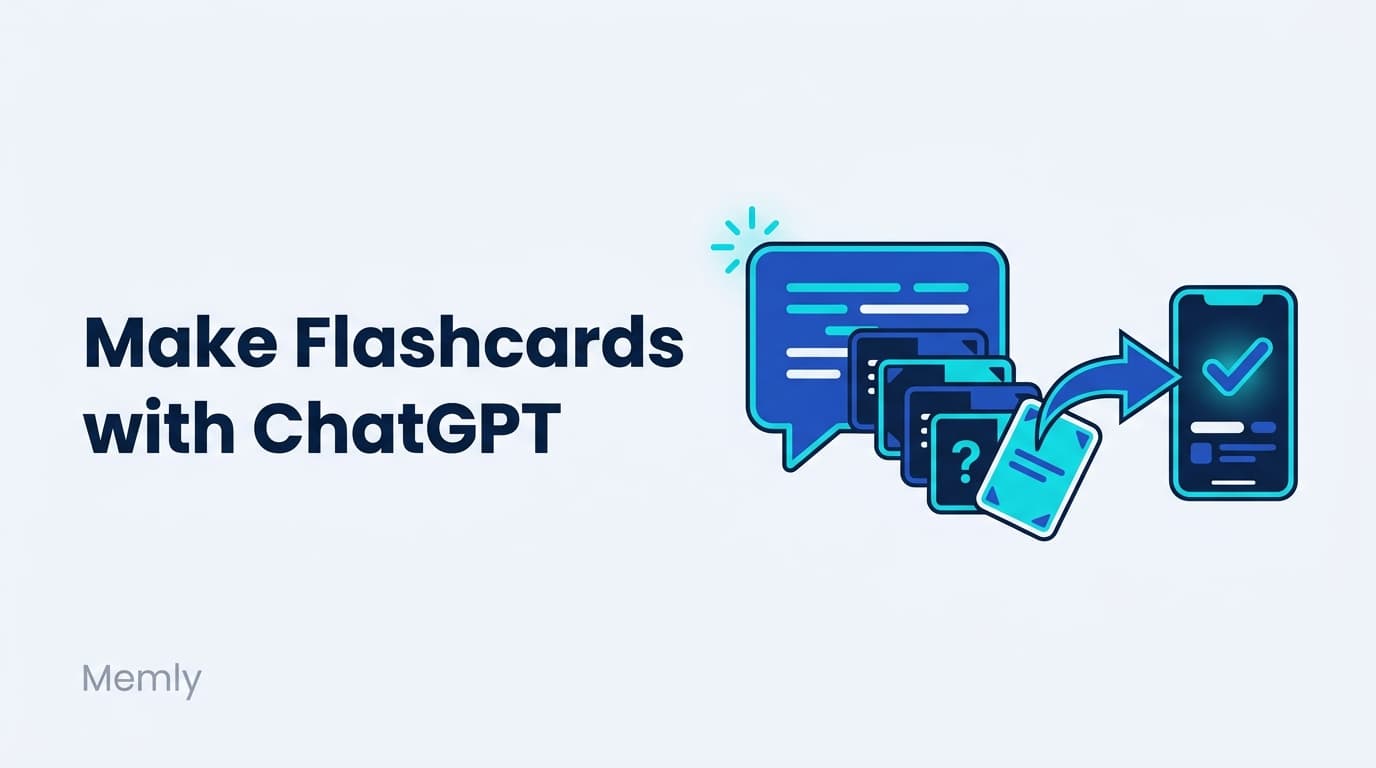
Learn how to make flashcards with ChatGPT that actually stick: the best prompts, exporting to Anki, and saving cards to a spaced-repetition deck.

Can't remember things at work? 85% of professionals feel this way. 7 brain-science causes, 7 evidence-based solutions, age-by-age strategies, and tools that fix struggling to retain information at work for good.

How to remember work information using 7 evidence-based tips: active recall, spaced repetition, chunking, Feynman, sleep. Retain information at work and stop forgetting meeting decisions, acronyms, and processes.

New job memorization made simple: 5 brain-science strategies plus a 30/60/90 plan. Stop being the new hire who can't remember new job info. Onboarding learning tips for when you're struggling to retain everything at a new job.

Everything you need to know about AI flashcard apps: how they work, why they outperform traditional methods, the top 5 apps compared, and how to choose the right one. Backed by cognitive science research.

A deep dive into how AI flashcard apps generate cards, optimize review schedules, and personalize learning. Covers NLP, spaced repetition algorithms (SM-2 vs FSRS 6.0), and the forgetting curve.

A from-scratch explanation of AI-powered memorization. Learn how the forgetting curve combined with AI achieves a 74% improvement in retention, with real-world use cases for exams, language learning, and more.

Memly integrates FSRS 6.0, the latest spaced repetition algorithm. Learn how this scientifically proven approach delivers 20-30% better learning efficiency on an innovative learning platform.
Improve memory retention by 74% with AI flashcards. Get started for free today.
A weekly digest of new articles on the forgetting curve, memory techniques, and exam prep. Free, unsubscribe anytime.
No spam. Unsubscribe with one click.