


A quick phone check can interrupt a study session, and returning to the task takes another effort. But the same phone may also hold your flashcards. The practical problem is separating those two uses: focused work with distractions out of reach, and a planned phone-based review.
The usual advice is "lock the phone away." That is only half right. Locking it away protects the hours at your desk and writes off every minute outside them, and those minutes are exactly where the same phone is the best memorization device you own.
The short version: during deep study sessions, get the phone out of sight, ideally out of the room. During dead time, commutes, lines, gaps between classes, flip it: the phone becomes the only tool that can turn those minutes into review. Enemy or ally is not a fixed identity. It switches with the time of day.
How your phone actually steals focus
The damage is not just notifications. A phone within sight keeps pulling at your attention. Part of your brain stays busy not looking at it. This is why silent mode and flipping it face-down never quite bring your focus back: the phone is still there, and your brain knows it.
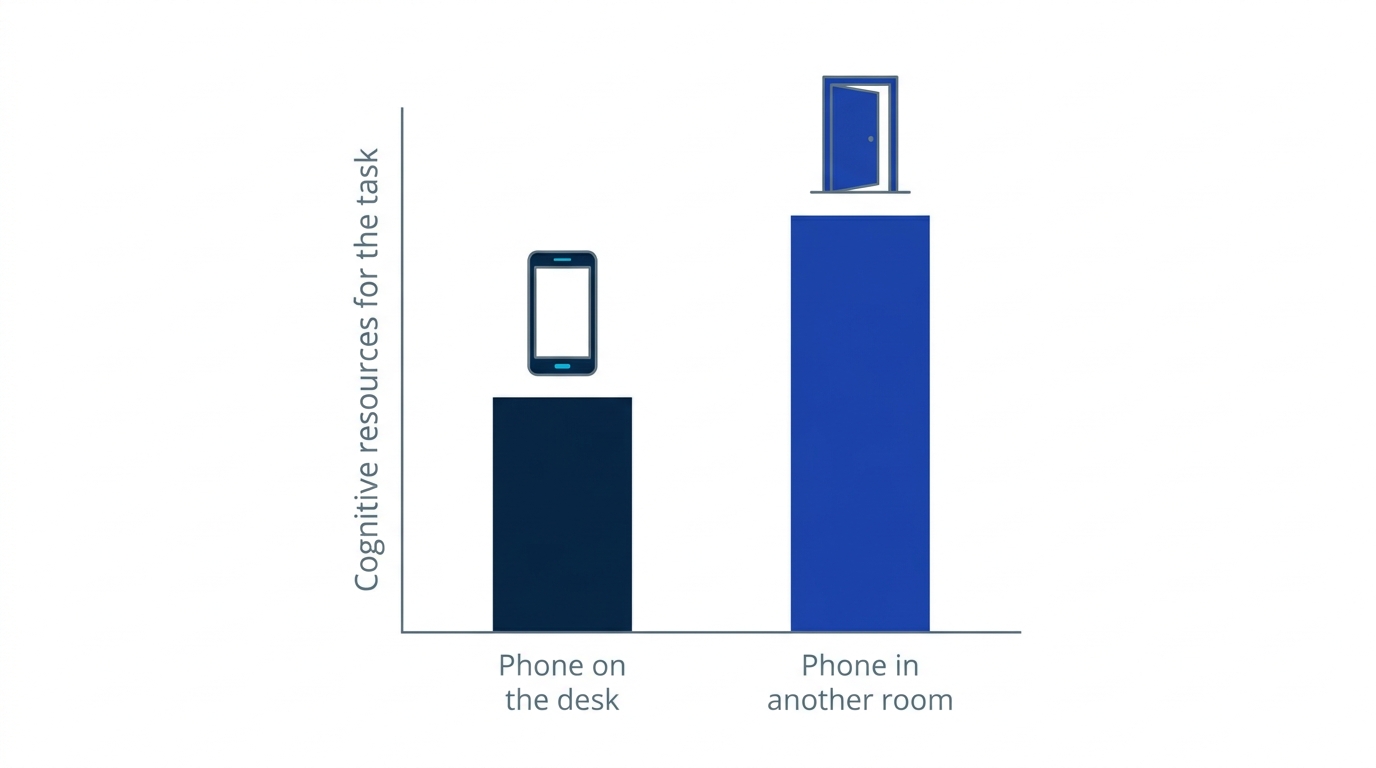
So the battle is won by physical distance, not willpower. White-knuckle resisting the urge to check is a self-defeating strategy: it spends the same attention you were trying to protect.
Environment design beats self-control
Distance is easier to arrange than it sounds.
- Another room during deep work: a distance annoying enough to walk is the strongest blocker ever invented.
- Time-box it: "phone-free for these 45 minutes" gives your brain an endpoint it can accept. When the box ends, check it guilt-free.
- Lower the friction of starting: leave the textbook open on the desk so the study material wins the first glance of the evening.
The point is not to heroically ignore the phone. It is to build a state where there is nothing to ignore. Design the environment once, and you stop paying willpower every night.
The reversal: your phone is the best retrieval device ever made
Here is what the "just lock it away" advice misses. In Dunlosky's 2013 review of study techniques, the two top-rated methods, practice testing (recalling from memory) and distributed practice (spacing reviews out), share one property: both work in sessions of a few minutes. A study method that fits in minutes, plus a device that is always in your pocket. Locking that combination away is throwing points in the trash.
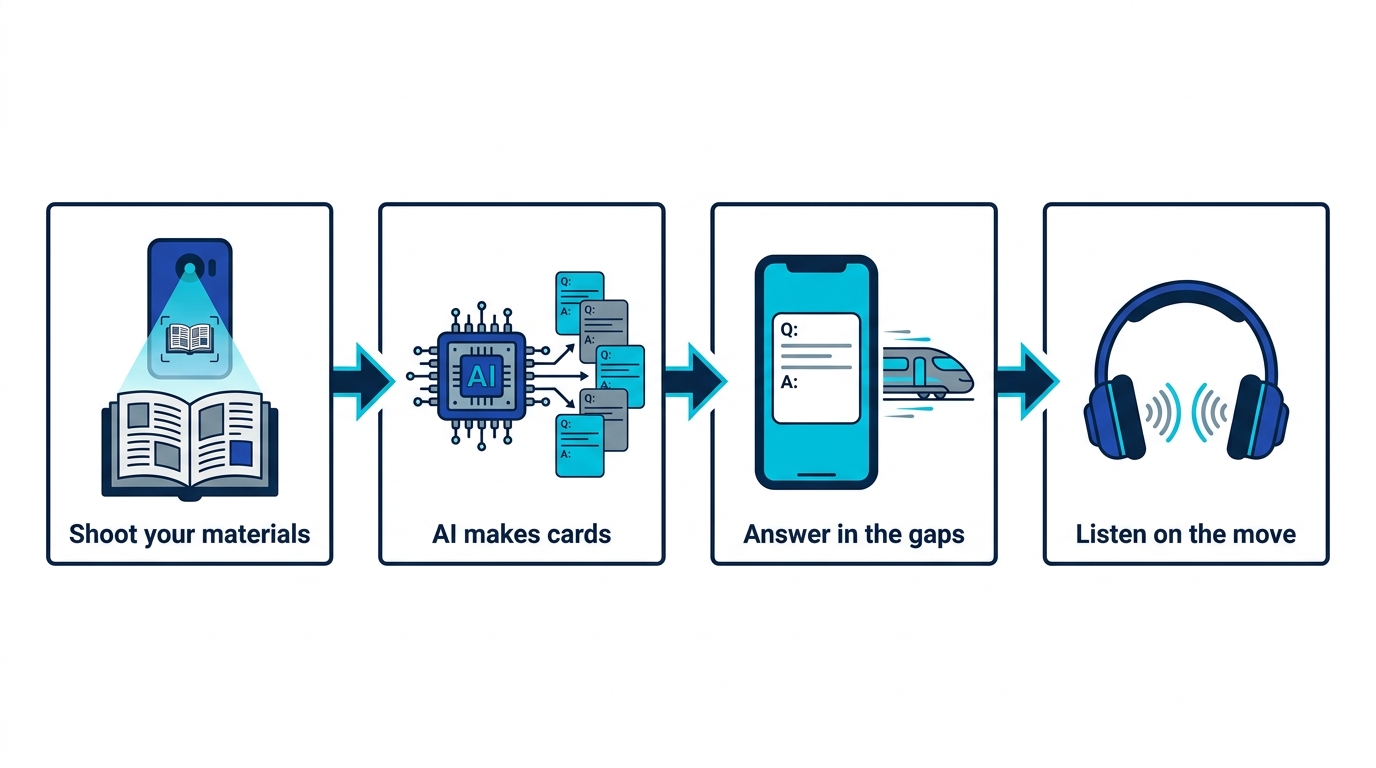
Shoot: turn your materials into flashcards
Photograph a textbook page or your notes, and AI converts them into question-and-answer flashcards. The camera is the bridge between desk study and dead-time review.
Answer: clear due cards in the gaps
The train, the checkout line, the ten minutes before class. Two-to-five-minute gaps mesh perfectly with spaced repetition: only the cards due today appear, and every one you answer is real progress. The thumb motion that opens a social feed can open your due cards instead. More on this in How to Study During Your Commute.
Listen: review with your ears when your hands are busy
Walking and chores can become review too: Review Radio turns your due flashcards into a two-host audio program, so even screen-free time counts. See Review Radio: Listen to Your Flashcards, Hands-Free.
The two-mode rule: deep time vs gap time
| Deep study time (desk) | Gap time (out and about) | |
|---|---|---|
| Where the phone lives | Another room or in your bag | In your hand |
| What you do | Understand, solve, read source material | Answer due cards, listen to review audio |
| Session length | 25-60 minutes | 2-10 minutes |
| Social media and video | Off limits | Fair game once reviews are done |
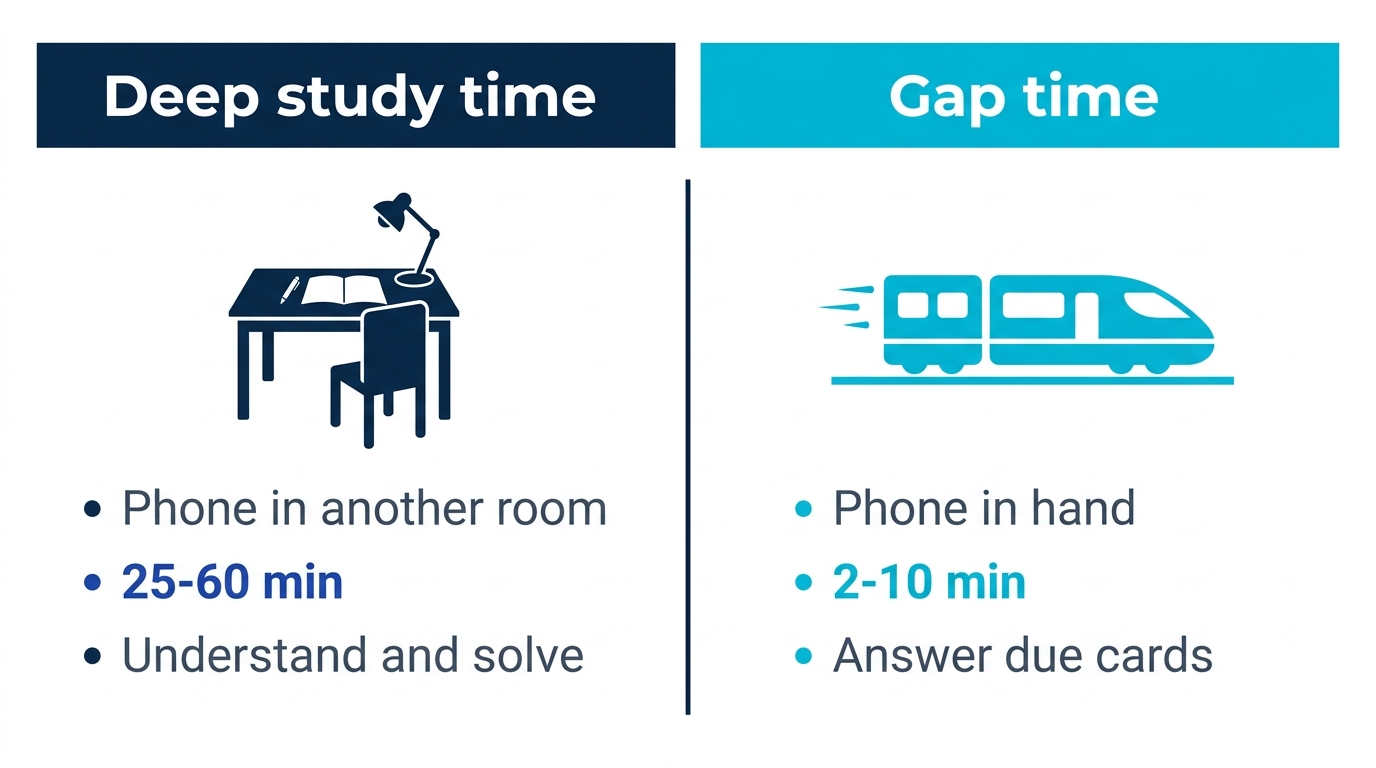
The quiet advantage of this rule: the phone stops being a temptation to resist and becomes a tool with a job. Rules that only forbid get broken. Rules that assign a role get kept.
Memly is built to make your phone an ally
- Snap a photo, get cards: AI generates flashcards from photos of textbooks, handwritten notes, handouts, or uploaded PDFs.
- FSRS spaced repetition slices review into minutes: only today's due cards appear, so even a two-minute gap moves you forward.
- Review Radio for ears-only time: your fading cards become an audio program for walks and chores.
- Web, iOS, and Android: PC at the desk, phone on the move, the same cards everywhere.
For the full picture of AI-assisted memorization, see the pillar guide AI-Assisted Memorization: How It Works and the Best Tools.
Tonight, change one thing: where the phone sits
Try the two modes for one session: put the phone out of reach during textbook work, then bring it back only for a planned card review. If the switch leads to scrolling, use a separate timer or paper cards for that session.
Tonight, leave the phone in another room while you study. When you finish, photograph one page of tomorrow's material and turn it into cards. Starting with tomorrow's first dead minute, your phone switches sides. Memly is free to try, no credit card required.
