


You sit down to study, then check your phone or make a drink because you are not sure where to begin. If that happens often, make the next action easier to identify. This article focuses on changes to the task and the setup that you can try at your next session.
Difficulty starting is not a useful measure of your character. One practical place to look is how the first step is defined: do you know exactly what to open and what to do next?
The short version: make the first step specific and small. Choose one question to answer, prepare the material in advance, and attach the session to a routine you already have, such as clearing the dinner table. These changes can reduce the decisions you face when you sit down.
Why "study chapter 3" never starts
"Study chapter 3" leaves several decisions open: which page, which activity, and when to stop. Replace it with an action you can see yourself doing, such as "Answer the first two questions on page 12, then check the solutions." A clear instruction removes one obstacle to starting.
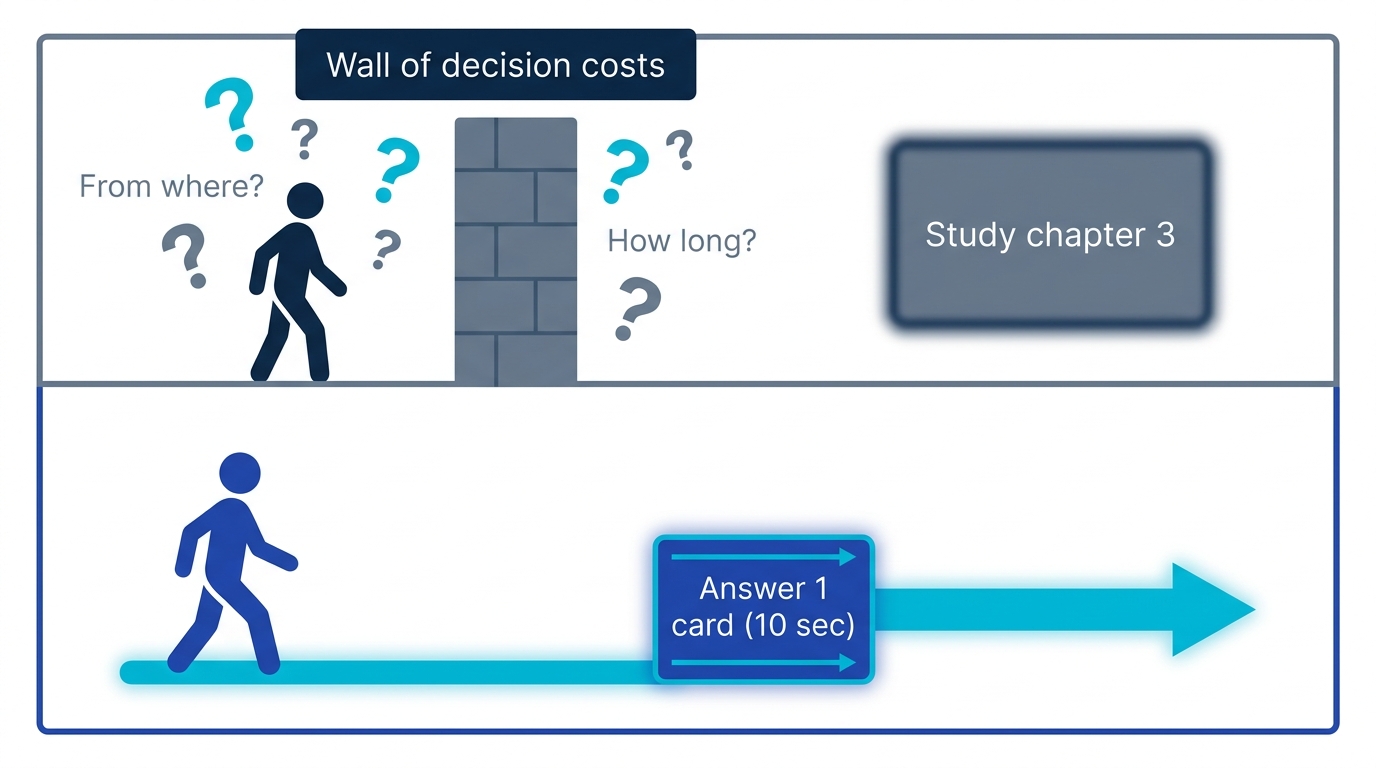
Perfectionism raises the wall higher: the more you insist on "two focused hours or nothing," the heavier starting becomes. How perfectionism stalls studying is covered in The Perfectionism Learning Trap.
Fix 1: shrink the first action until it is laughably small
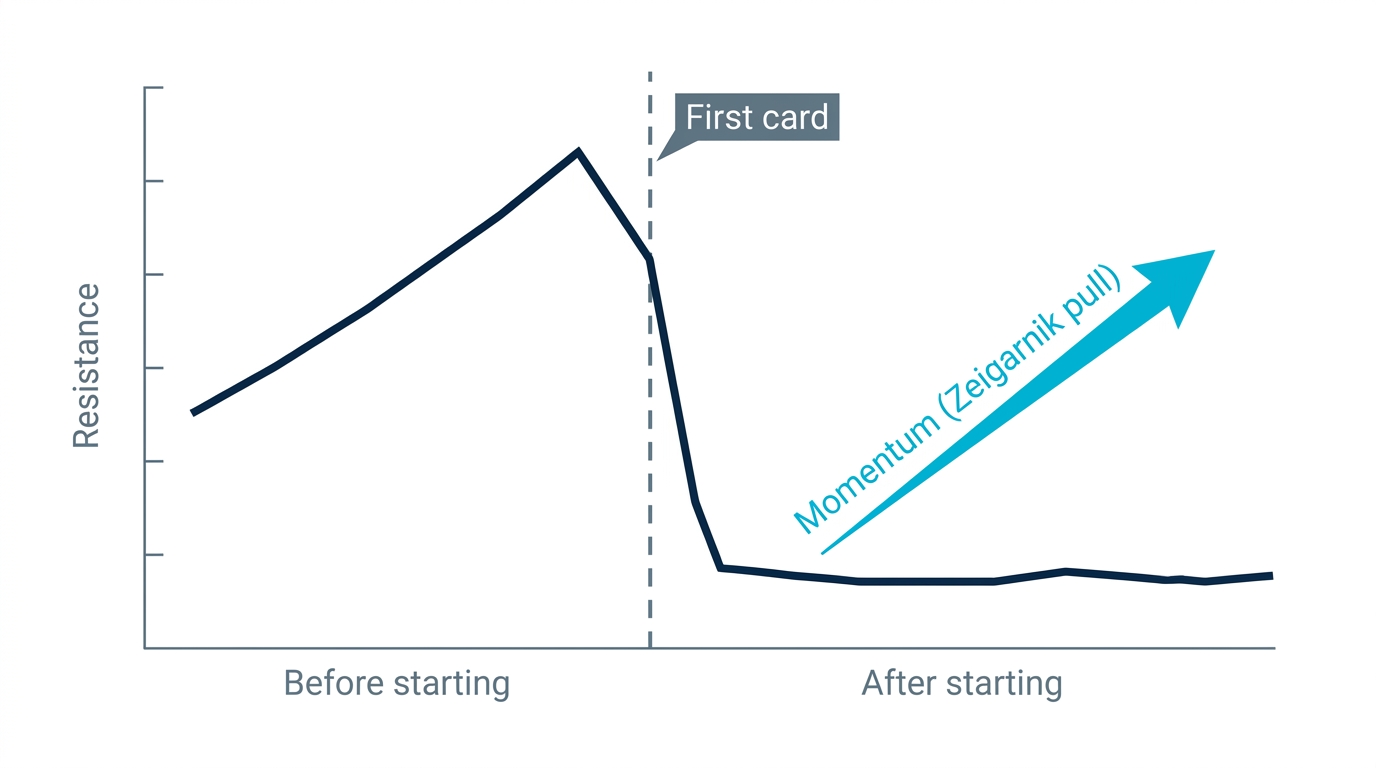
Cut the opening move down to something executable with zero decisions: not "study chapter 3" but "open the app and answer the one card it shows." One card takes ten seconds. It feels absurd, and that is fine. The exercise is not aimed at volume; it is aimed at the hardest checkpoint of the session, which is getting started at all.
After one card, you may find it easier to continue. If not, you can stop at the small target you set. The point is to make starting manageable, not to disguise a long session as a tiny commitment.
Fix 2: outsource the "what should I study" decision
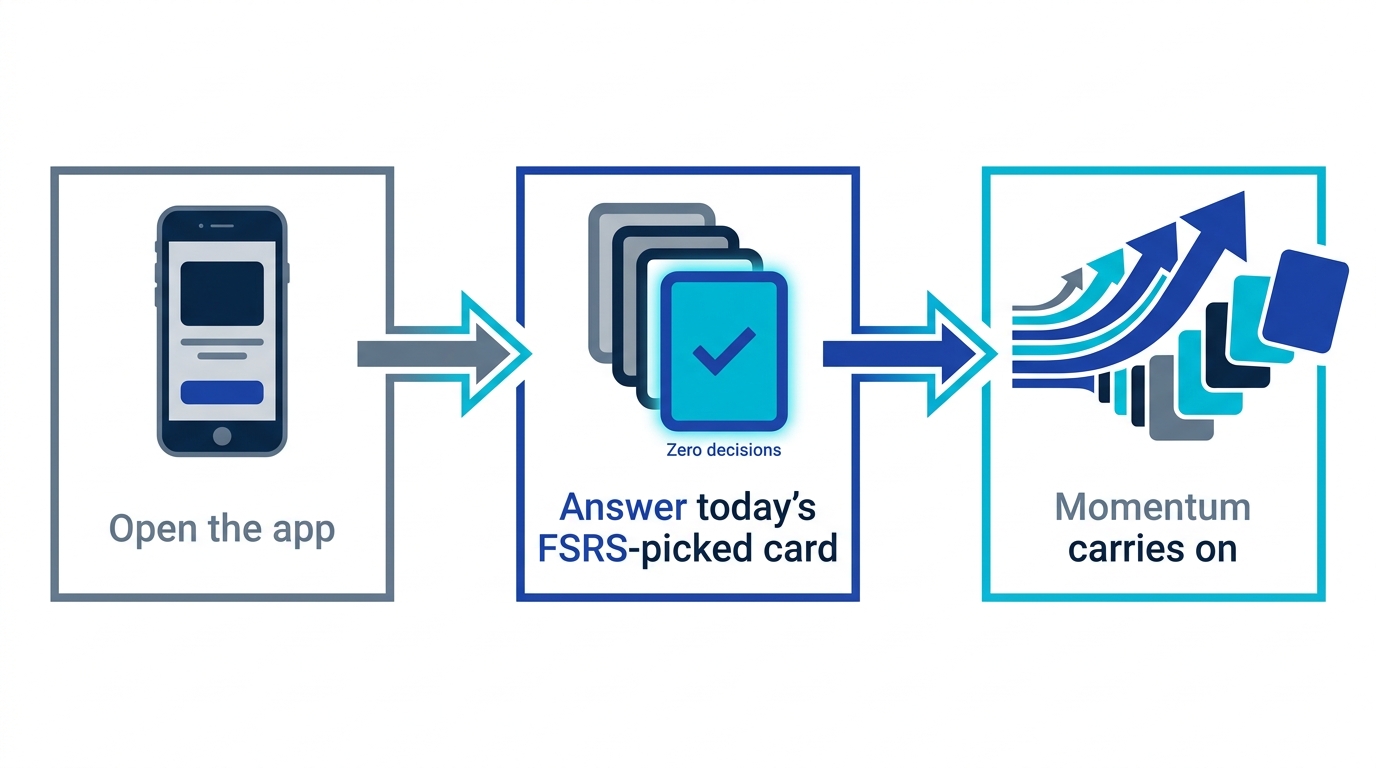
Choose the first task before you sit down. With a spaced-repetition app, that can be the first card due for review. With paper materials, it can be a bookmarked question. You still choose your study priorities, but you do not need to choose them again at the start of every session.
Fix 3: fix the starting trigger
"I'll study when I find time" finds no time, ever. Remove starting from the realm of decisions by welding a trigger to an action:
| Designed to never start | Designed to start itself |
|---|---|
| "Two hours of studying sometime tonight" | "After clearing the dinner table: five cards at the desk" |
| "Get through chapter 3" | "Open the app, answer the first card shown" |
| Deciding what to study each session | The algorithm queues it; you only answer |
| Waiting for motivation | "Train doors close, app opens": a place-based trigger |
Every entry in the right column shares one property: nothing in it has to be decided at the moment of starting. That is what lets it survive a tired evening.
For the broader system of making study stick as a habit, see Why You Can't Stick to Studying.
Memly is engineered to minimize the starting barrier
- The moment you open it, the work is chosen: FSRS has today's due cards ready, so zero decisions stand between you and the first rep.
- Making material is decision-free too: photograph a page or upload a PDF and AI writes the Q&A cards.
- Web, iOS, and Android: pairs perfectly with place-based triggers like "on the train, app open."
For the full picture of AI-assisted memorization, see the pillar guide AI-Assisted Memorization: How It Works and the Best Tools.
Stop auditing your willpower, starting tonight
Before your next session, write one concrete instruction, such as "After dinner, answer the first question on page 12." If finding the material is what slows you down, use our study-space setup checklist to remove that extra step.
Tonight's small assignment: prepare one question for your next session, or answer one card now. Stop there if that is the target you chose. Memly is free to try, no credit card required.
