


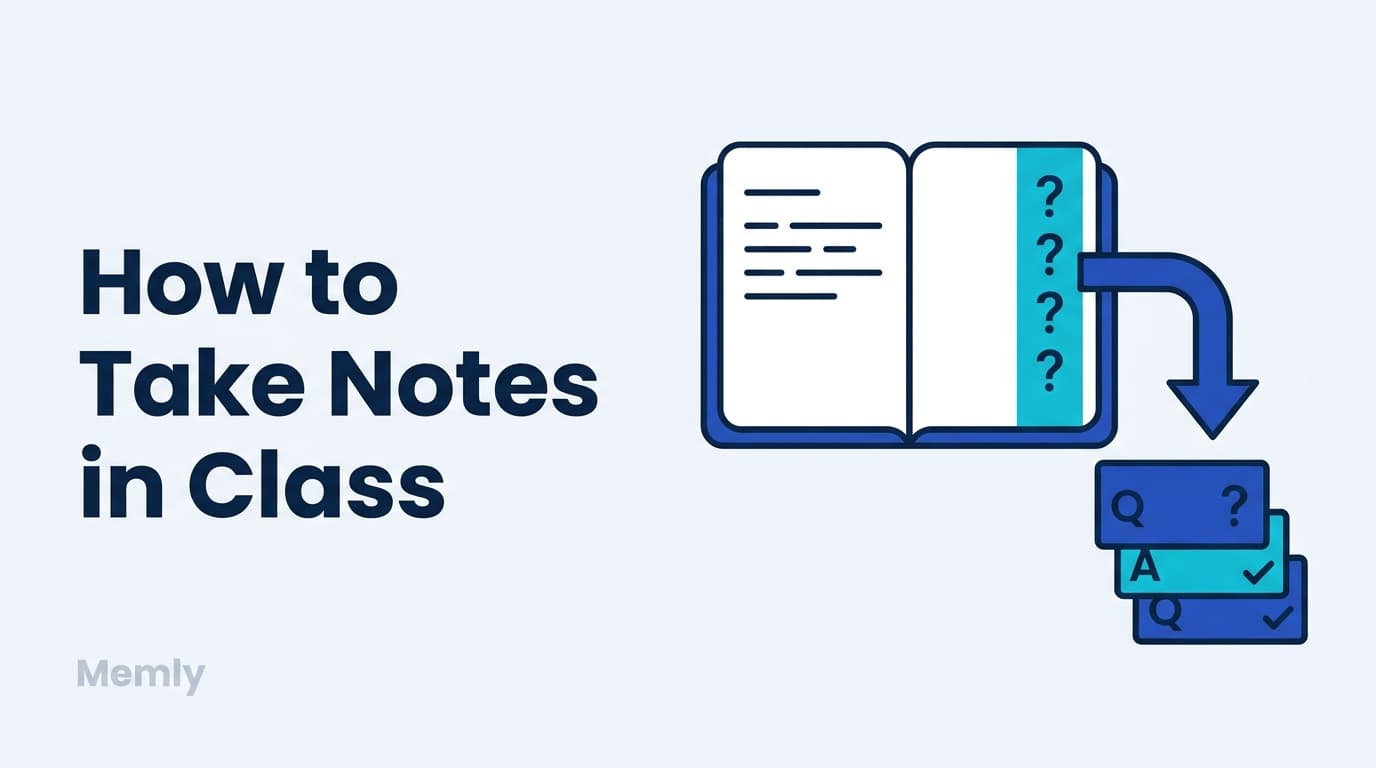
A complete notebook can still be hard to study from. You may recognize the slides but struggle to explain the lesson without looking. The aim is to keep a useful record and make it easy to test what you understand.
In class, focus on four things: questions, explanations of why something happens, points the teacher emphasizes, and anything you do not understand yet. After class, use those notes to answer questions from memory. Turn the important points into flashcards if you need to review them over several days.
Why Complete Notes Still Need a Self-Test
Trying to copy every sentence can leave less attention for following the explanation. When slides are available later, write a brief summary in your own words and note what the slides do not capture.
And rereading notes later is exactly that: rereading, the technique Dunlosky's 2013 review classified as low-utility. It grows recognition (looks familiar) but not recall (can produce it on a blank page). The "I get it when I read it" trap happens with notebooks too; we broke it down in Why You Forget What You Read.
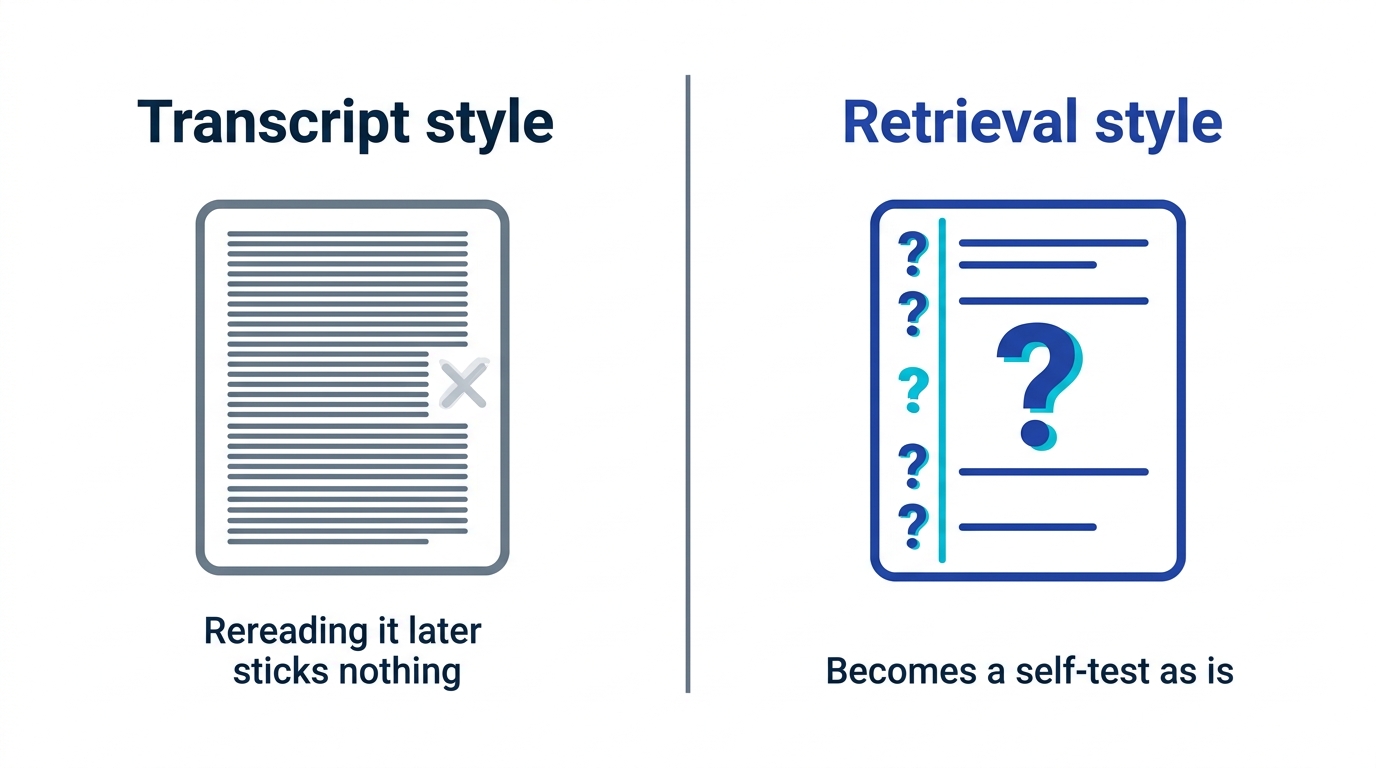
Four things to write, two things to skip
| Write this | Why |
|---|---|
| Notes phrased as questions ("Why does X lead to Y?") | They become self-test items with zero rework |
| One-line "why" and "so what" remarks | Meaning links are retrieval hooks |
| Whatever the professor stressed or repeated | That is priority intelligence about the exam |
| Marks on what confused you | Those are your top review targets |
Try to capture these points during class, when the explanation is fresh. A recording or shared slides can help you fill gaps later, but a quick note of where you became confused makes that follow-up easier.
If the teacher shares the slides, you usually do not need to copy them word for word. If slides are not available, keep the definitions, worked steps, and examples you will need later. Use highlighting to find those points quickly, then test yourself rather than relying on highlighting alone.
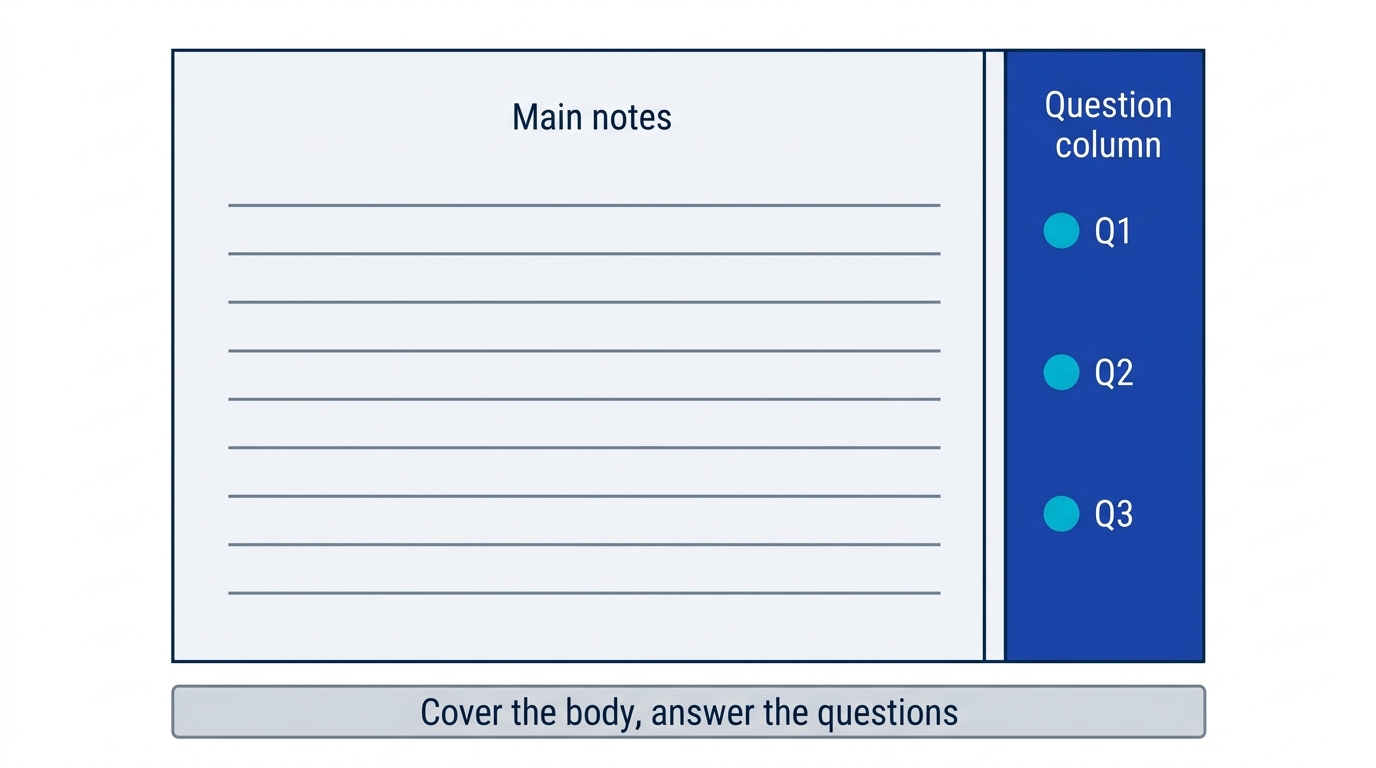
Page layout: content on the left, a question column on the right
A practical format: leave a narrow column on the right edge of the page and, next to each chunk of notes, write a question that the chunk answers (an adapted cue-column layout). To review, cover the body and answer the question column. The notebook becomes a problem set.
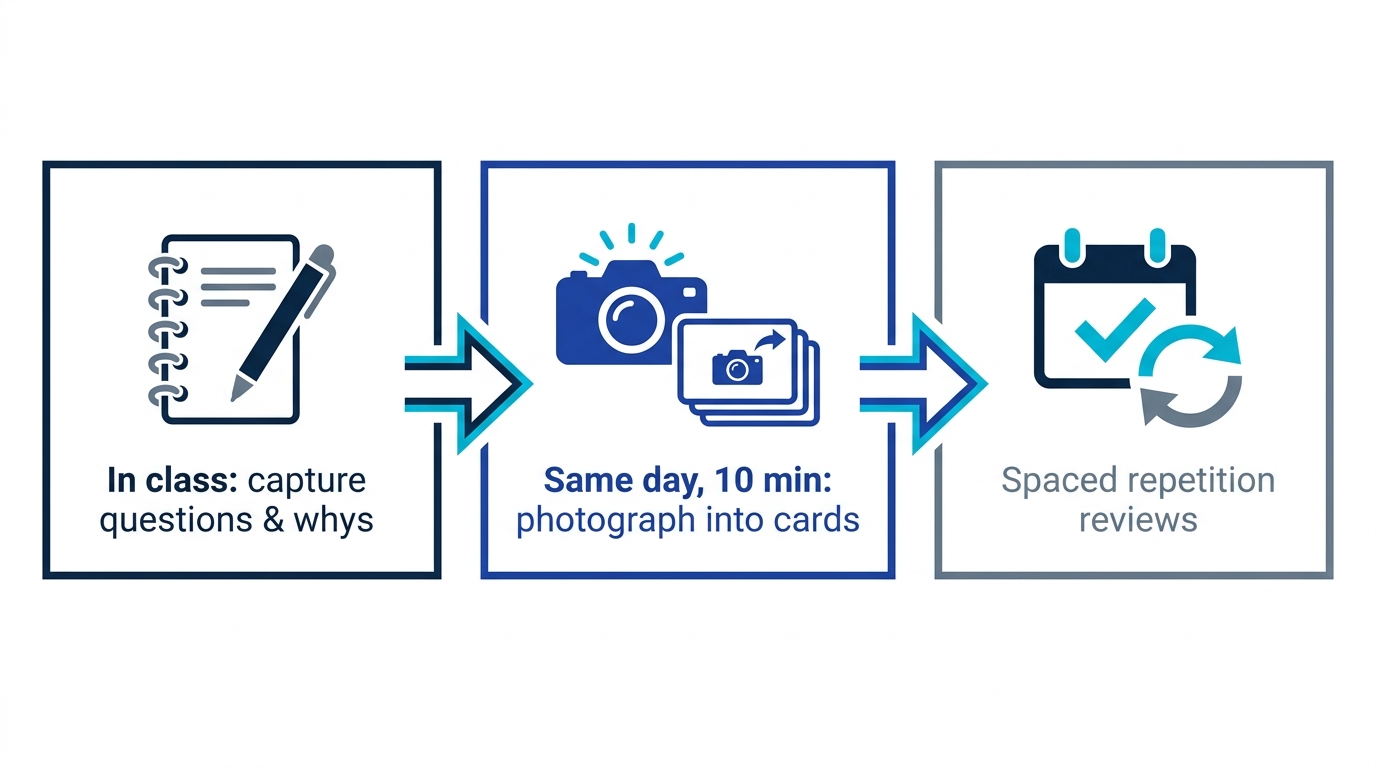
The finishing move: ten minutes after class, notes become cards
Even the best notes fade on the shelf; the forgetting curve does not respect stationery. So spend ten minutes on the same day and convert the notes into question-and-answer flashcards. If you kept a question column, this is nearly mechanical.
You can photograph a notebook page and use AI to draft cards from it. Check the transcription and answers before studying; then a spaced-repetition scheduler can suggest later reviews. The full routine is in turning lecture notes and slides into flashcards.
Memly takes over after the notebook closes
- Photograph handwritten notes: check the generated questions against the page, especially where handwriting is unclear.
- Review timing is suggested automatically: FSRS uses your review history to estimate when each card needs attention.
- Web, iOS, and Android: capture after class on a laptop, answer on the phone during the commute.
For the full picture of AI-assisted memorization, see the pillar guide AI-Assisted Memorization: How It Works and the Best Tools.
Next class, draw one column
Try the layout for one lesson before changing your whole notebook. After class, cover the notes and answer the three questions. Mark any answer you need to check with the teacher or textbook.
One action: in your next class, draw a column on the right edge and write just three questions in it. After class, photograph the page and turn it into cards. Memly is free to try, no credit card required.
