


A summer plan needs room for both new material and later review. If every day is filled with new chapters, earlier topics can become difficult to recall by the end of the break. Plan a weekly check of older material alongside reading and practice questions.
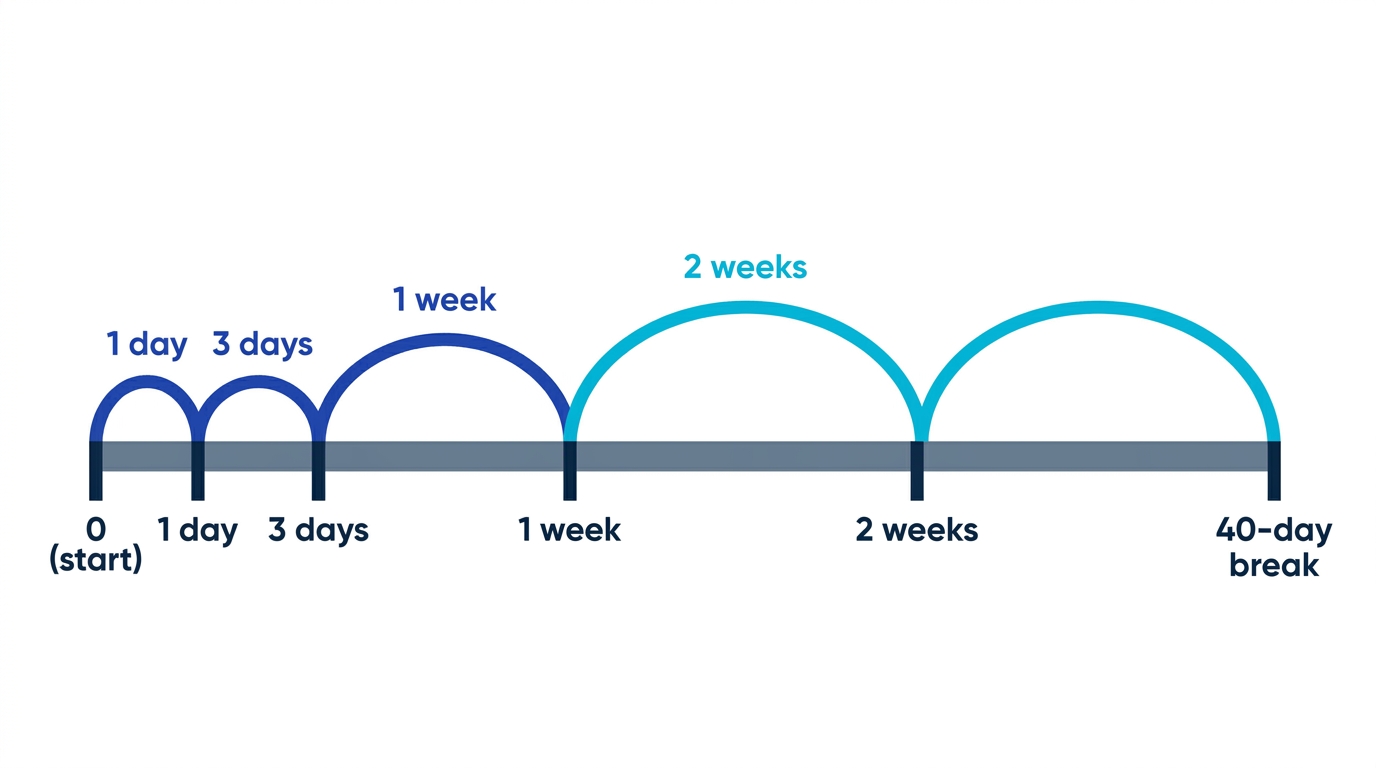
Here is the flip side: a long break is the single best window of the year for spaced repetition, because stretching review intervals from one day to three days to a week to two weeks requires exactly the thing summer gives you: consecutive days.
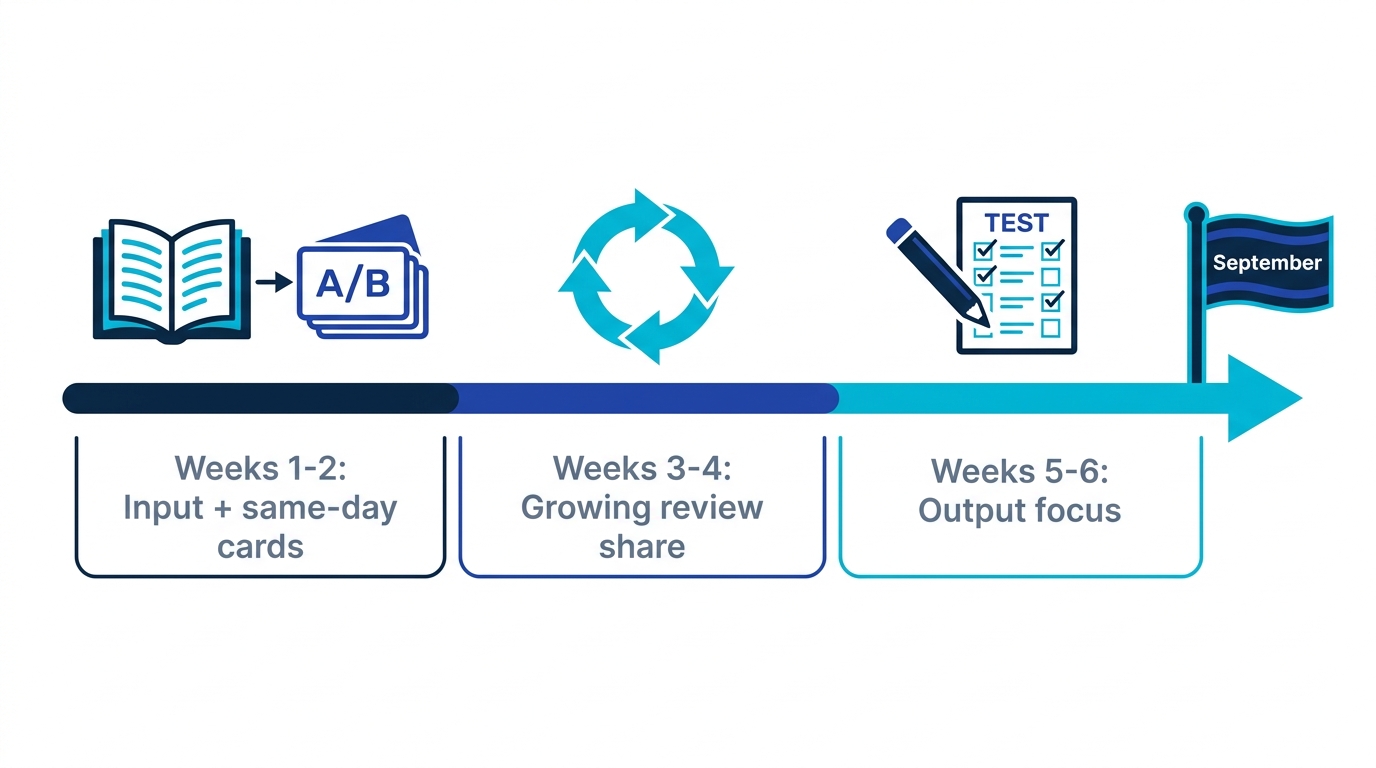
The short version: split the break into two phases. First half: input, plus converting everything you learn into flashcards the same day, with 15 minutes of daily review to keep the pile alive. Second half: output, meaning practice problems and past papers, feeding every mistake back into the card pile. That structure decides how much of your summer still exists in September.
Why a hard-working summer evaporates by September
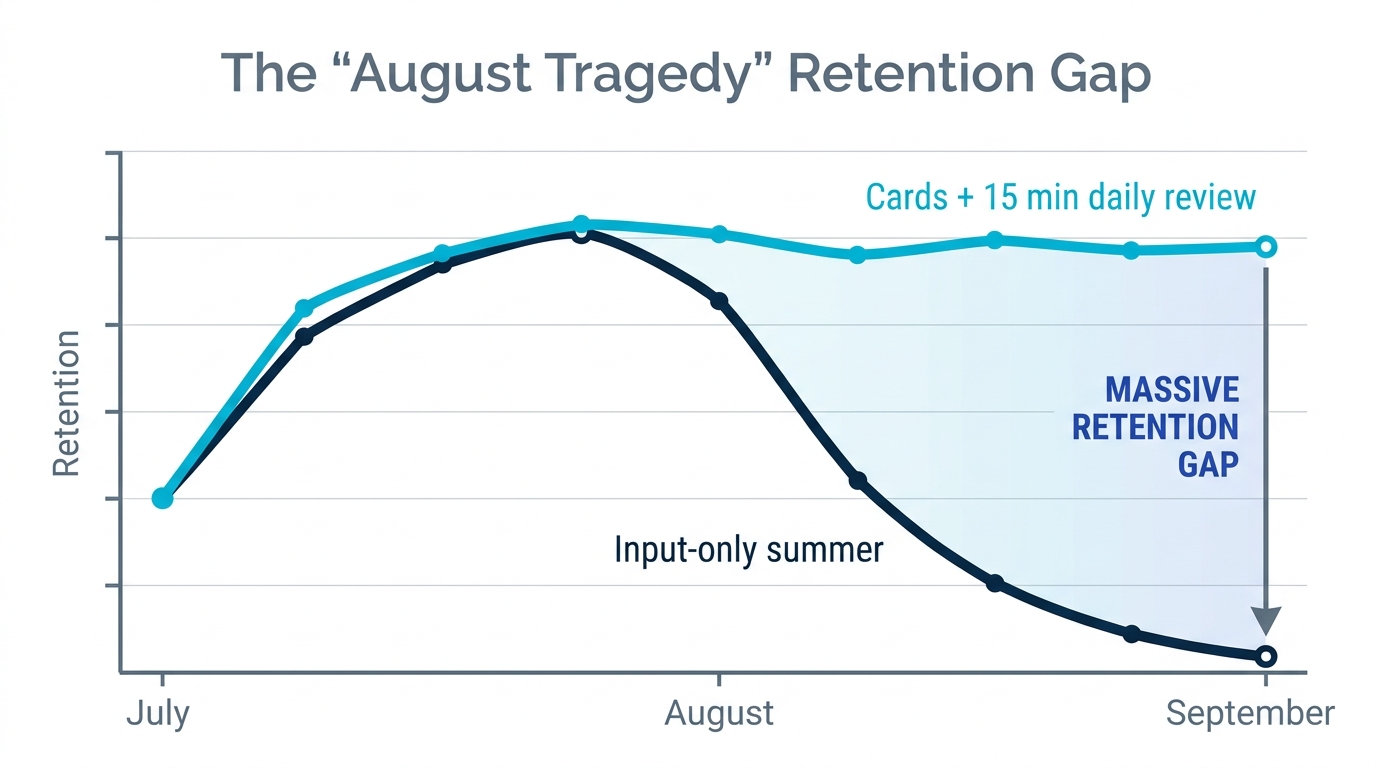
Ebbinghaus's forgetting curve applies to summer courses just as brutally as to everything else: without review, most of what you learn fades within days. Whatever you studied on July 20 is, with zero review, essentially gone by September 1. A summer built on "read it, understood it, moved on" starts collapsing from the bottom while you are still adding to the top.
Dunlosky's large 2013 review of study techniques rated rereading among the least effective methods, while practice testing (retrieval) and spaced review earned the top ratings. So the planning question worth answering for the break is how those two techniques get wired into every single day, rather than how many hours the timetable holds.
The two-phase structure of a 40-day memory plan
| Period | Main job | Every day |
|---|---|---|
| Weeks 1-2 | Heavy input (courses, textbooks, vocabulary) | Convert the day's material into cards + 15 min review |
| Weeks 3-4 | Continued input, growing review share | 20 min card review + card weak areas |
| Weeks 5-6 | Output (past papers, practice problems) | 15 min card review + convert every mistake into a card |
The middle column changes every two weeks. The right-hand one barely changes at all, because some amount of card review sits in every row. Review is not a phase that arrives in August. It starts on the first evening of the break.
First half: finish the day with cards, not notes
After each study session, convert what you learned into question-and-answer flashcards, the same day. Do not rewrite it into a beautiful summary notebook; summaries take hours and rereading them later builds familiarity, not recall. With an AI flashcard tool you can photograph the textbook page or upload the course PDF and get cards in seconds, so the conversion costs minutes, not evenings.
The daily 15 minutes: design review around intervals, not volume
Material sticks hardest when you recall it right as it starts to slip. The Cepeda et al. (2006) meta-analysis shows that spacing reviews out in time itself strengthens retention, because each successful recall after a gap takes more effort than one made minutes later, and that effort is what deepens the trace. One day, three days, a week, two weeks: those gaps need consecutive calendar days, and forty of them is more room than the sequence requires. The logic of review timing is laid out in The Forgetting Curve and the Best Time to Review.
You should not manage those intervals by hand. A spaced repetition algorithm like FSRS picks out, every day, only the cards you are about to forget. Your job is 15 minutes at breakfast or before bed, answering what the app serves.
Second half: switch to output, recycle mistakes into cards
From week 5, move your center of gravity to practice problems and past papers. The rule that makes this phase count: never leave a missed question behind; turn its cause into a card so it re-enters the review loop. The scheduler then keeps resurfacing your weakest points for the rest of the break, without you having to track which ones they were.
Three rules that keep the plan alive
- Same-day cards beat the timetable: even when the schedule slips, the day's learning is safe once it is in card form.
- Anchor the 15 minutes to an existing habit: right after breakfast or right before bed survives vacation chaos far better than "sometime today".
- Stop re-perfecting the plan: fifteen minutes of recall is worth more than another hour of replanning.
And if you want the deeper reason "I read it but can't remember it" happens at all, we broke it down in Why You Forget What You Read.
Memly automates both halves of the plan
- Same-day conversion in about a minute: photograph handouts, textbook pages, or handwritten notes, or upload PDFs, and AI generates Q&A cards.
- FSRS handles the calendar: as the pile grows over 40 days, the algorithm selects just what needs reviewing today.
- Web, iOS, and Android: study at your desk, review at the beach house.
For the full picture of AI-assisted memorization, see the pillar guide AI-Assisted Memorization: How It Works and the Best Tools.
Make it the summer that is still there in September
Check the plan at the end of each week by answering a few questions from earlier topics. If recall is weak, reduce the new material for the next week and make room for review. A useful plan changes when the results tell you it should.
One action: photograph one page of what you studied today and turn it into cards. That one minute is the difference between a summer that evaporates and a summer that compounds. Memly is free to try, no credit card required.
