



With three months before an exam, you have time to revisit topics across several sessions. Start by checking the syllabus, trying representative questions, and estimating the hours you can sustain. The plan below is a framework to adapt to that baseline, not a promise tied to a fixed daily workload.
Ninety days, worked backward from the test date, splits cleanly into three phases: input, retrieval, and rehearsal. Certification exams, licensing exams, a fall test date: the shape is the same. Unlike a three-day rescue, this one gets to use compound interest on memory.
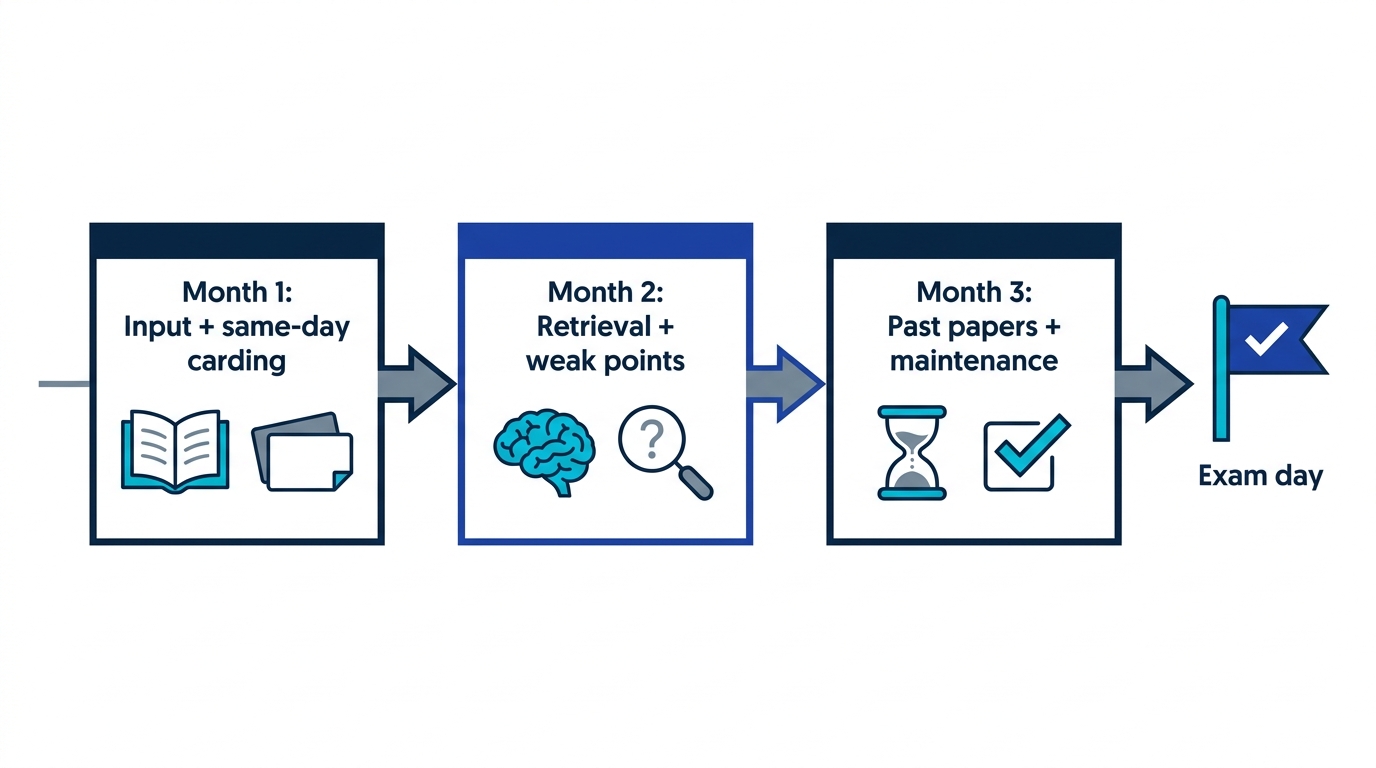
The short version: Month 1, work through the material and convert it into flashcards the same day you read it. Month 2, shift to retrieval practice and hunt down weak points. Month 3, take past papers under real conditions while the spaced repetition algorithm keeps your cards alive at minimal cost. That sequencing alone removes the final-week panic.
Why three months is the golden window for spaced repetition
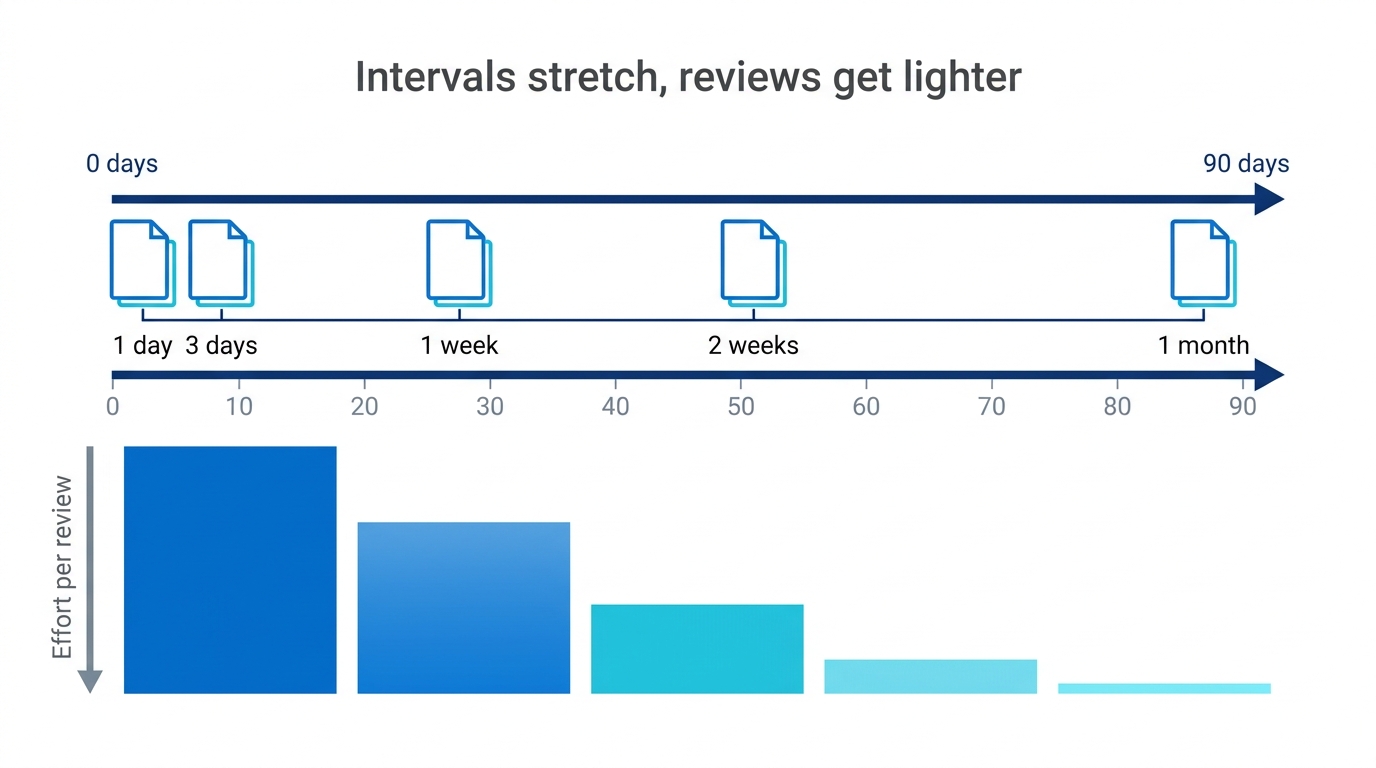
Three months of runway invites one obvious plan: more passes through the book. The spacing research points elsewhere. A meta-analysis (Cepeda et al., 2006) found that spacing reviews further apart produces longer-lasting memory, and stretching intervals that way requires calendar time. A three-day cram caps you at hours between reviews; ninety days lets intervals grow from one day to three days to a week to two weeks to a month. And as intervals stretch, each review gets cheaper, until late-stage maintenance is just an occasional check.
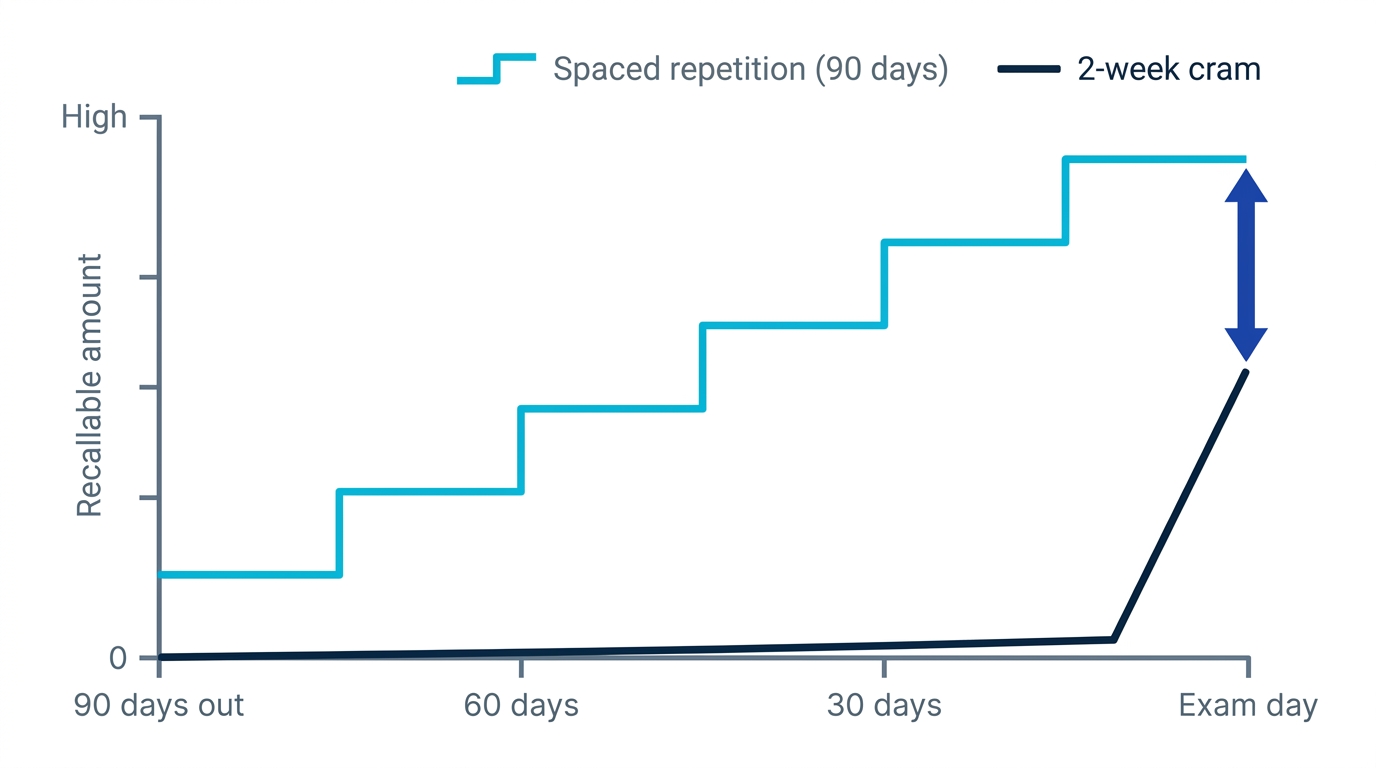
The difference shows up on exam day. Crammed material collapses before the test, while spaced material is still retrievable on the morning it counts.
The 90-day reverse plan: three phases
| Phase | Main job | Time split |
|---|---|---|
| Month 1: Input | One full pass through the material, carding each day's reading same-day | Input 7 : Review 3 |
| Month 2: Retrieval | Daily card practice, identify and repair weak points | Input 3 : Review 7 |
| Month 3: Rehearsal | Timed past papers; cards maintained by spaced repetition | Past papers 6 : Review 4 |
The ratios are the part worth staring at. Review time climbs from three parts in ten to seven, which means month 2 will feel like going backward: fewer new pages a day, and the visible sense of progress gone with them.
Month 1: never read without carding it the same day
The goal of the first month is one honest pass through the material with everything testable converted into question-and-answer form. Read-only progress is a mirage: by the time you finish the book, the first chapters are gone. Photograph pages or upload PDFs and AI generates the cards in seconds, so the carding step costs you almost nothing.
Month 2: use retrieval to expose what you cannot do
Practice testing sat at the top of Dunlosky's (2013) effectiveness review. In month 2, answer your due cards daily and keep a list of the cards you fail repeatedly: those are your real weak points. Go back to the source only for those, rebuild your understanding, and rewrite the card. This is where scores actually move.
Month 3: past papers as dress rehearsals
The final month belongs to timed, exam-condition practice. Never solve-and-forget: every miss becomes a card. The full protocol is in How to Use Practice Tests. Meanwhile your card reviews stay surprisingly light, because the algorithm only resurfaces what you are about to forget.
When the plan breaks (it will)
- Lost a week: do not restart. Clear the overdue queue over a few days; most of the memory comes back.
- Input running late: at the start of month 2, cut scope to high-frequency topics. Reliable memory of what is tested beats a perfect pass of everything.
- Suddenly it is three days out: switch to the rescue plan, Exam in 3 Days? The Science-Backed Way to Cram.
Put the 90-day plan on autopilot with Memly
- Same-day carding: photos of textbook pages, PDFs, or pasted text become Q&A cards automatically, erasing month 1's biggest chore.
- Zero schedule management: the FSRS algorithm decides which card to show when, per card, across the whole 90 days.
- Web, iOS, and Android: input and past papers at the desk, retrieval practice on the phone in between.
For the full picture of AI-assisted memorization, see the pillar guide AI-Assisted Memorization: How It Works and the Best Tools.
Exam-day you is built by today's design
Use the first week to establish a realistic baseline: try representative questions and record how much study time you actually have. Adjust the 90-day plan to those results rather than treating every suggested daily target as a requirement.
Bet on final-week all-nighters, or start compounding today. The first move is small: photograph one page of what you studied today and make your first cards. Memly is free to try, no credit card required.
