


"I studied five hours today." The satisfaction is real. The test score, somehow, is not. The reason is simple: of those five seated hours, almost none turned into memory. As long as you only count hours, this quiet waste stays invisible. Effort accumulates, scores stand still, and you conclude something is wrong with you.
The short version: there is no magic number of hours. As a planning guide, 1-2 hours a day works during the school term and 2-4 hours in the month before an exam. But what actually predicts your score is how many times you successfully recalled material from memory and whether you cleared the reviews that came due. Hours measure attendance, not learning.
Why "how many hours" has no correct answer
The same three hours can be two completely different things. Three hours of reading produces close to zero acts of recall; reading is input, and the ability exams test, pulling answers out of your own head, is only trained in the moment you try to retrieve. Worse, the longer you reread, the smoother the pages feel, and the fluency illusion inflates your sense of progress precisely when nothing is being stored.
Dunlosky and colleagues' 2013 review of study techniques rated practice testing and spaced review at the top, and neither of those is a function of how long you sat. As a unit of studying, the hour has terrible resolution.
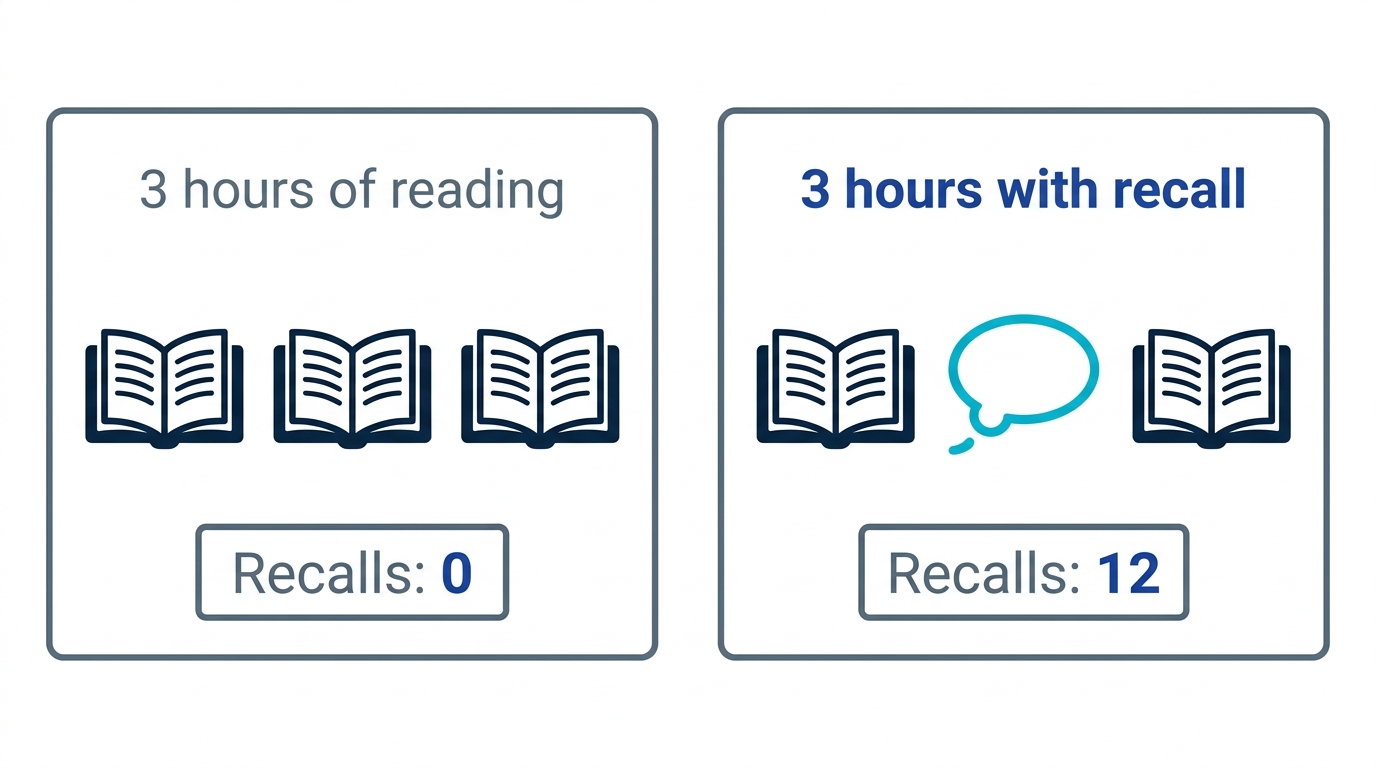
| 3 hours of reading | 3 hours with recall built in | |
|---|---|---|
| Successful recalls | Nearly zero | Dozens |
| How it feels that day | Great (everything flows) | Rough (recall is effortful) |
| What remains in a week | Familiarity | Answers you can produce |
The comfortable hours evaporate and the uncomfortable ones stick. If hours are your only target, you will drift toward the comfortable kind without noticing, because nothing in the tally penalizes the easier choice.
How many hours should you study a day? (by situation)
Plans still need a time box. These anchors are scheduling guides, not laws of nature.
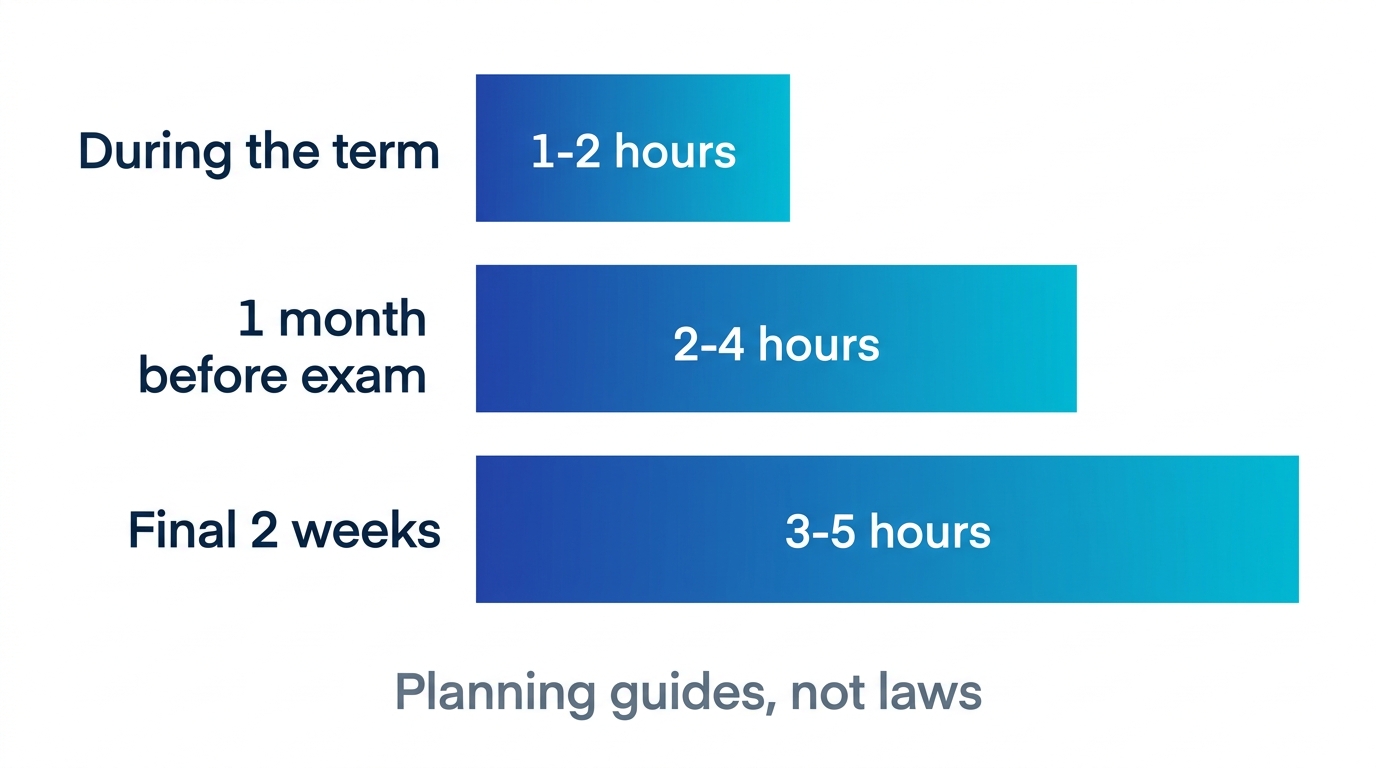
- During the term (maintenance): 1-2 hours a day. Prioritize same-day carding of new material and clearing due reviews.
- One month before an exam: 2-4 hours. Shift the ratio from new input toward retrieval practice and practice tests.
- Final two weeks: 3-5 hours, but never funded by sleep; what you cram at 1 a.m. is deleted along with the consolidation you skipped.
The box itself does nothing, and anyone can fill it. Only the recalls inside it convert to points.
What to count instead: retrieval density
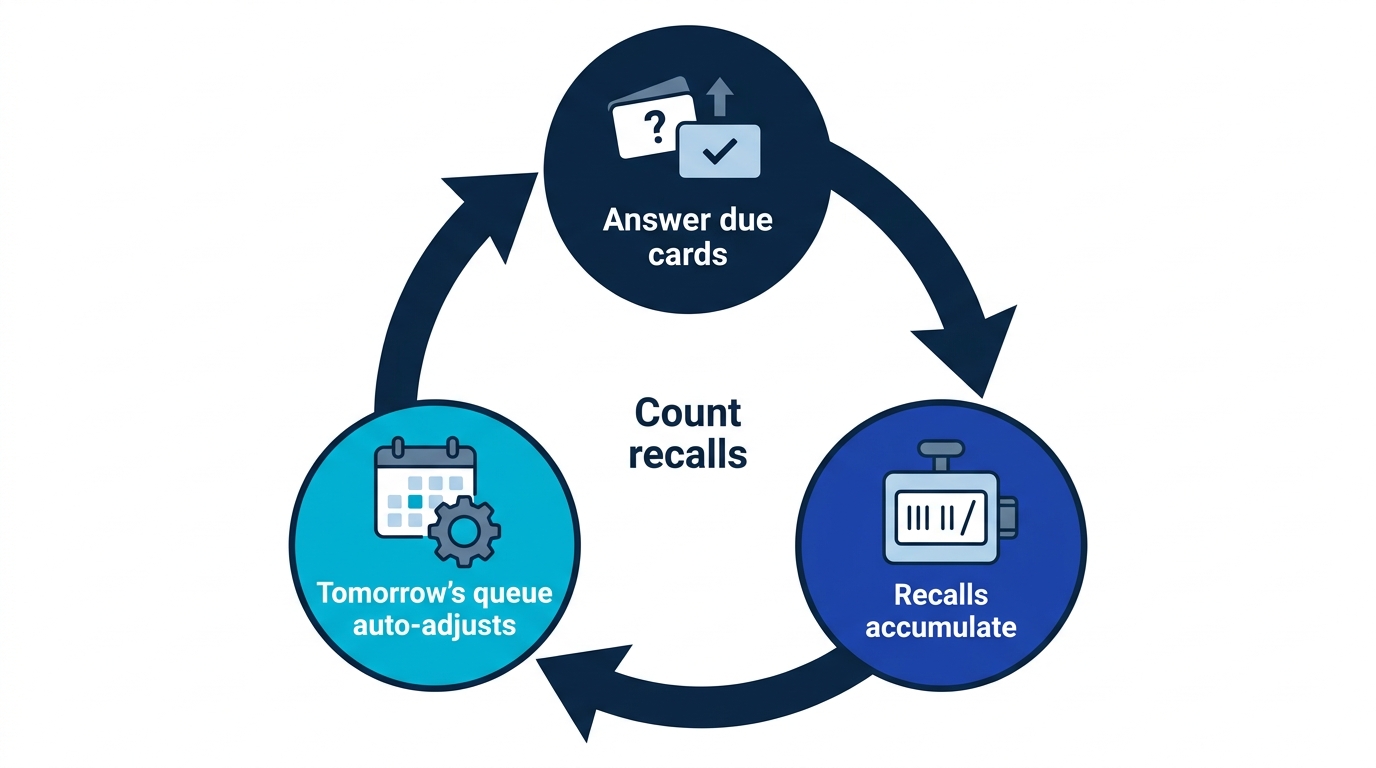
Starting tonight, change the number you log. Not "how long did I study" but "how many times did I successfully recall something from memory." Thirty flashcards answered is thirty. A blank-page brain dump counts each item you produced. Unlike hours, this number cannot be gamed by comfortable rereading, since rereading produces no retrievals to log.
As for how many recalls are enough, the working rule from How Many Times Do You Need to Review? is roughly 3-5 successful recalls at expanding intervals. Counted that way, a study day becomes a stack of per-card retrieval successes.
For the full anatomy of studying hard without scoring, see Studying Hard but Not Improving?, and for making each hour denser, the 25-minute cycle with a recall warmup.
Memly counts your recalls for you
The weakness of retrieval density is bookkeeping. Memly turns the metric into the default:
- Your daily quota arrives as a number of recalls: the FSRS spaced repetition algorithm queues exactly the cards due today. Clear the queue and the day's retrieval work is done.
- Material becomes cards in minutes: AI generates question-and-answer cards from textbook photos, PDFs, or pasted text, so creating things to recall costs almost nothing.
- Web, iOS, and Android: a ten-minute commute adds to the same count as the three hours at your desk.
In our internal study (n=648), learners on this system showed an 89% improvement in study continuity. A queue that empties gives the day a visible finish line, which an open-ended hour target never does. For the full picture of AI-assisted memorization, see AI-Assisted Memorization: How It Works and the Best Tools.
Change one number tonight
Most readers will keep logging hours, because hours are easy to count and generous with satisfaction. But your past exams have already told you what that satisfaction is worth.
One action: when you finish studying tonight, write down not the hours but the number of things you recalled from memory. If that number is near zero, tomorrow's fix is not more time. Memly is free to try, no credit card required.
