


You knew it last night. You knew it on the bus this morning. Then the exam paper hit the desk and your mind went blank, only for the answer to surface, mockingly intact, the moment the bell rang. This can happen even after careful preparation. Hundreds of hours of preparation, taxed away by a few minutes of panic.
How you respond to exam pressure can be influenced by how the memories were built and what you do in the moment. Both are areas you can work on.
The short version: going blank can mean retrieval is temporarily jammed, not that the knowledge is gone. The fix has two layers. Before the exam, practice recalling under exam-like pressure: timed, closed-book, in randomized order. On the day, run a fixed protocol: skip and return, exhale slowly, restart from one easy question.
Why does your mind go blank during tests?
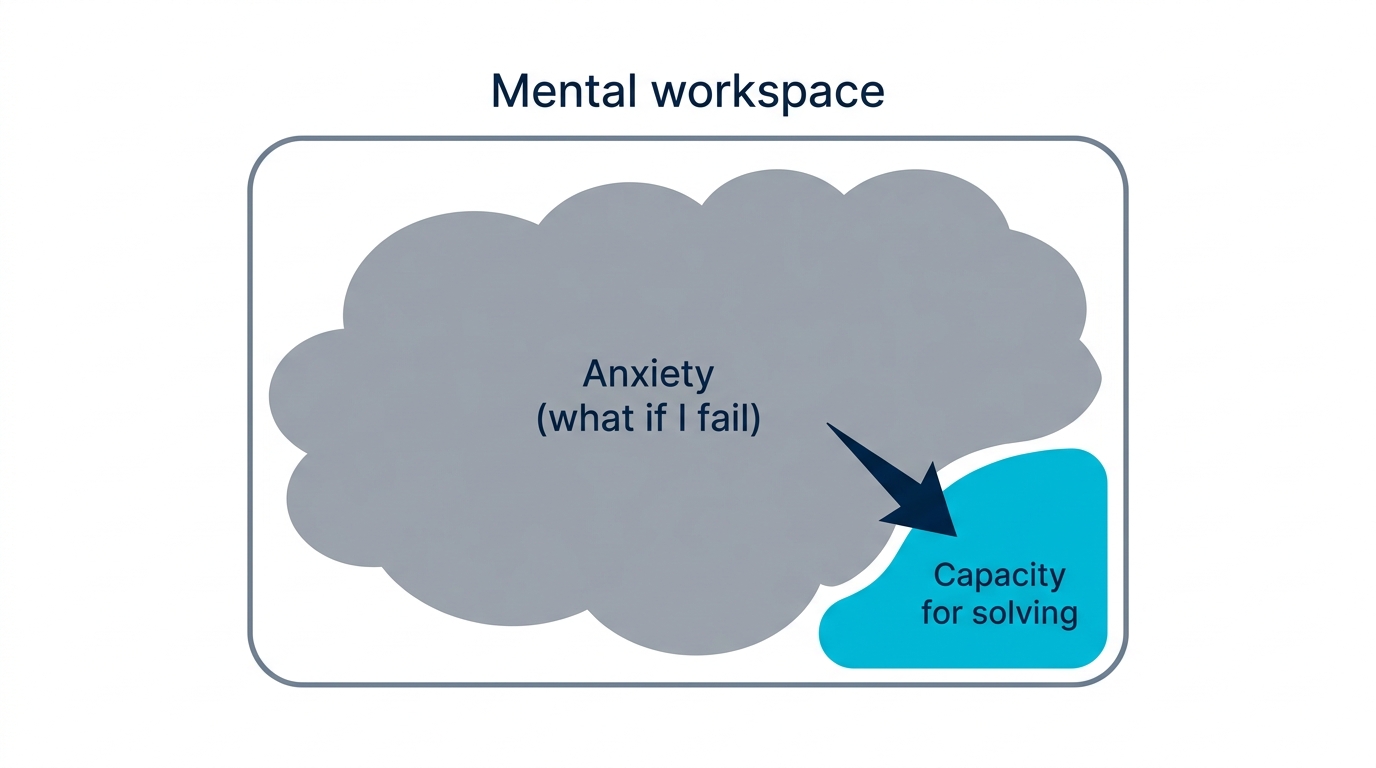
Two things stack up. First, anxiety occupies your mental workspace. Thoughts like "what if I fail" and "there is no time" are themselves mental workloads, and every bit of capacity they consume is capacity the exam questions no longer get.
Second, and far less discussed: most people's memories have only ever been retrieved in calm conditions, in a quiet room, in textbook order, with the answers nearby. The exam is the opposite: a clock running down and questions arriving in random order. Asking a memory to perform under conditions it has never practiced is asking a lot.
Retire the memory that only works in a quiet room
Alongside ways to stay calm, preparation can include building exam-grade memories: rehearsing retrieval with the pressure included.
- Practice with a timer: once you understand the material, try some past papers under timed conditions, so the ticking clock becomes a rehearsed condition, not a novel threat.
- Recall in random order: textbook order lets each item hint at the next. Changing the order helps you check whether you can recall each item independently.
- Produce from a blank page: practice producing an answer without looking, especially when preparing for written questions.
- Overlearn your openers: drill each subject's first move until it runs on autopilot. A familiar first step can make it easier to get started despite nerves.
Daily spaced repetition also gives you opportunities to practice recall. Memly's FSRS adjusts when cards are due based on your learning history; it does not by itself reproduce exam timing or question formats. Use past papers for that extra practice. For structuring the final days before an exam, see Exam in 3 Days? The Science-Backed Way to Cram.
The 3-step protocol for the moment you go blank
Even well-prepared minds jam. What separates a bad five seconds from a ruined exam is having a pre-decided procedure, so panic never gets to improvise.
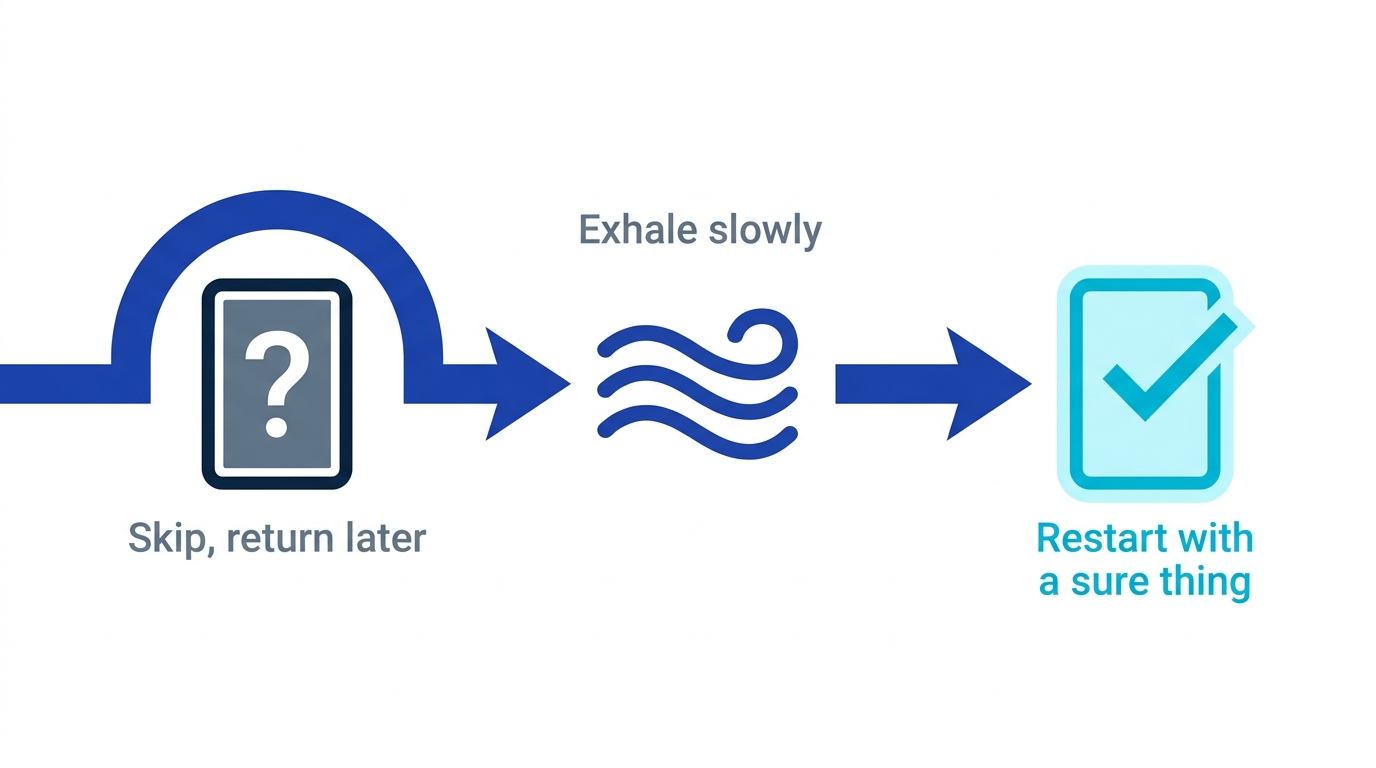
- Skip it, come back later: grinding on a blocked question feeds the panic. Step away, and the answer often releases on its own while you work elsewhere; "I remembered it when I came back" is a nearly universal experience.
- Exhale longer than you inhale: a few slow, extended out-breaths may help you settle. Keep your breathing comfortable rather than forcing a set duration.
- Restart with a sure thing: solving one easy question restores the feeling of answers flowing, and that flow primes the recall of harder ones.
What you can do before versus during the exam
| Before exam day | In the room, in the moment |
|---|---|
| Timed, randomized, closed-book retrieval practice | Skip the blocked question, return later |
| Overlearn each subject's opening moves | Slow, extended exhales |
| Protect sleep; fatigue amplifies anxiety | Restart from one easy question |
The night before matters more than any last-minute page: a sleep-deprived brain is worse at both remembering and staying calm, as covered in Why All-Nighters Don't Work. And if your version of going blank happens while speaking, see How to Memorize a Speech or Presentation.
Make recall practice part of your daily routine
- Regular chances to practice recall: FSRS schedules reviews based on your learning history. Try answering each question before revealing the answer.
- Your jams become your prep list: cards you fail return sooner automatically, surfacing weak points before test day does.
- Materials in, cards out: AI converts photos, PDFs, and notes into cards, so your time goes to retrieval practice itself.
For the full picture of AI-assisted memorization, see the pillar guide AI-Assisted Memorization: How It Works and the Best Tools.
Blank is not gone
The answer that arrived the moment the bell rang was never gone. It jammed. Blaming yourself mid-exam only hands more of your workspace to the anxiety. The kinder and more accurate thought is: it is in there, and my job right now is question two.
The smallest step you can take today: quiz yourself on 10 items in random order instead of textbook order. That is rep one of exam-grade memory. Memly helps you keep up a review schedule, free to try, no credit card required.
