


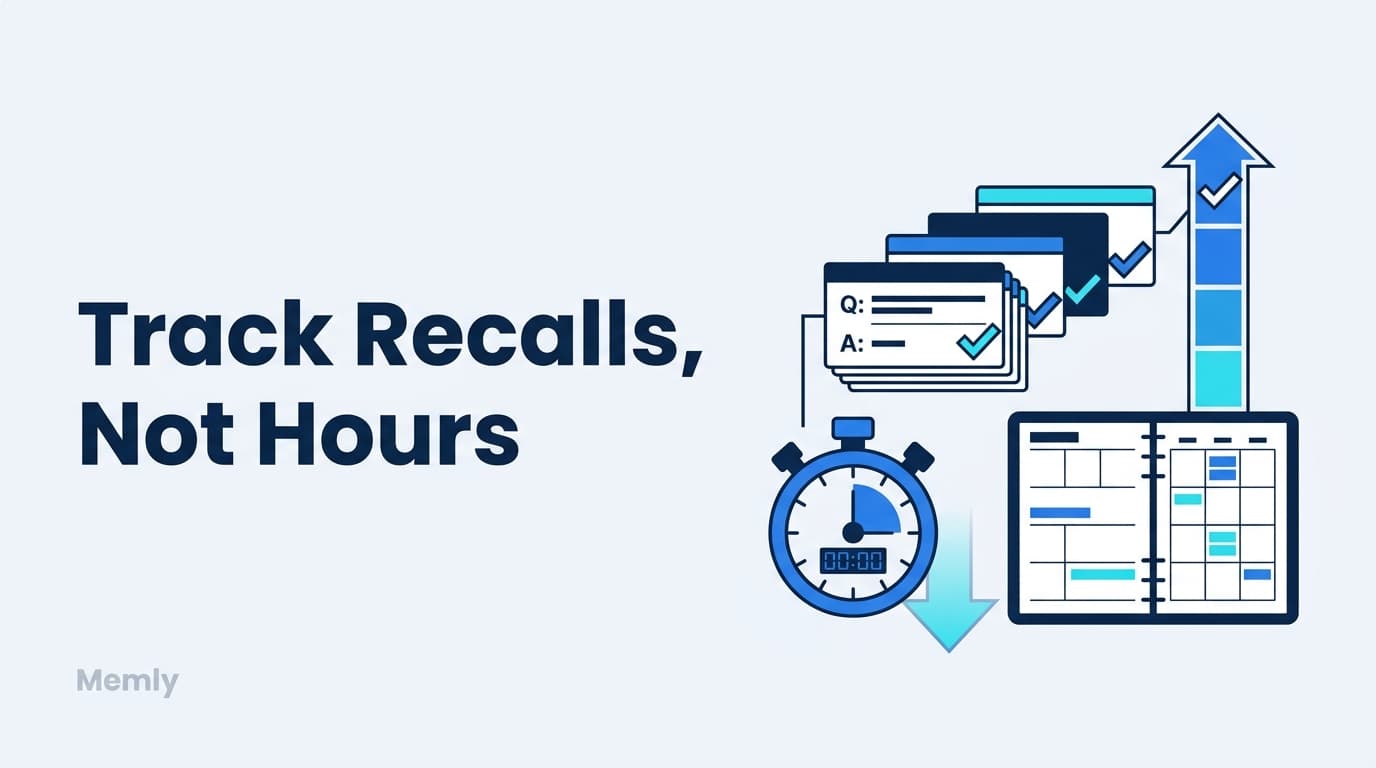
You logged another three hours in your study tracker today. The planner is color-coded, the streak is alive, the weekly bar chart keeps climbing. The only thing not climbing is your test score. If that sounds familiar, the problem may be the numbers themselves: you are carefully tracking metrics that have no connection to grades, and the satisfying graph keeps that effort going day after day.
Tracking itself is not the mistake. Tracking the wrong thing is.
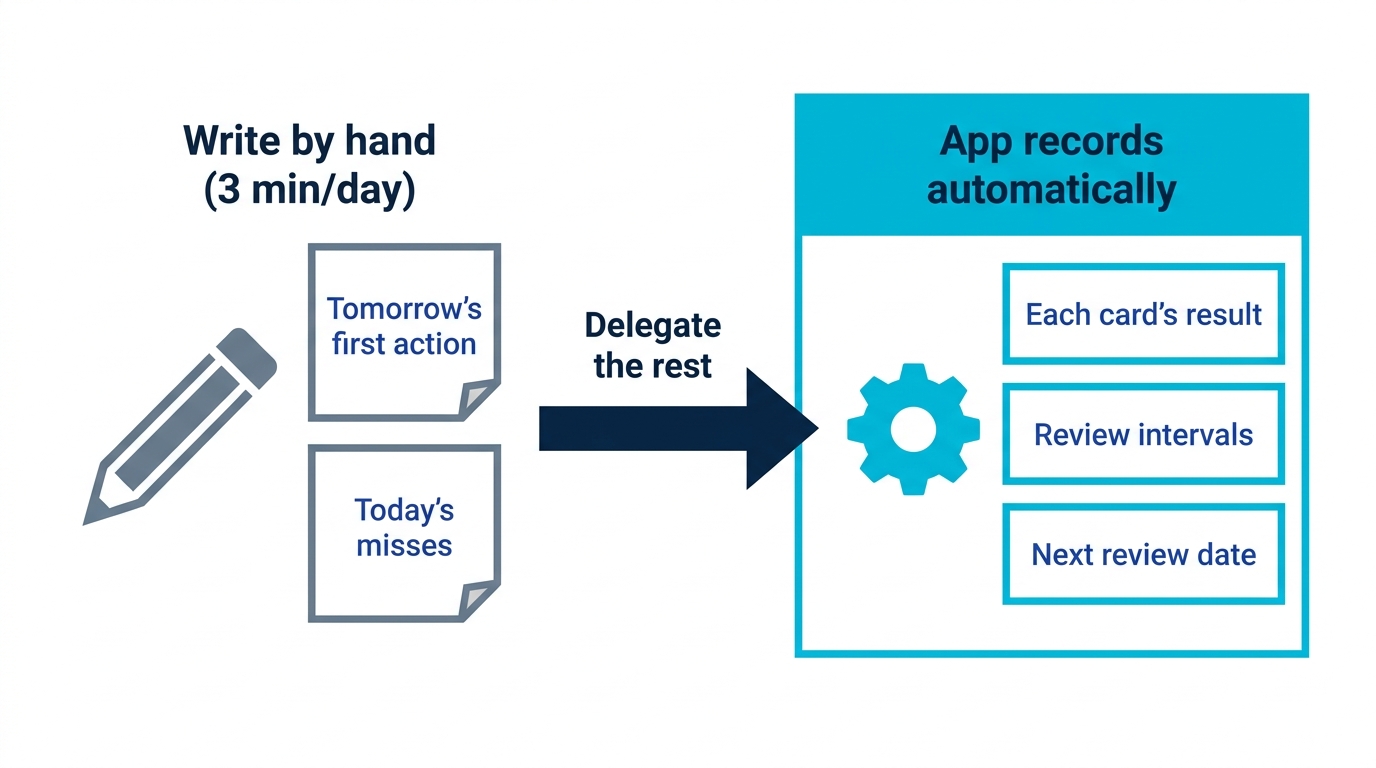
The short version: track successful recalls, not hours. Hours and pages are attendance metrics; what moves grades is how many times you retrieved knowledge from memory. Keep only two things in your planner: tomorrow's first action and today's misses. The rest of the record keeping, your app already does automatically.
Does tracking study time even work?
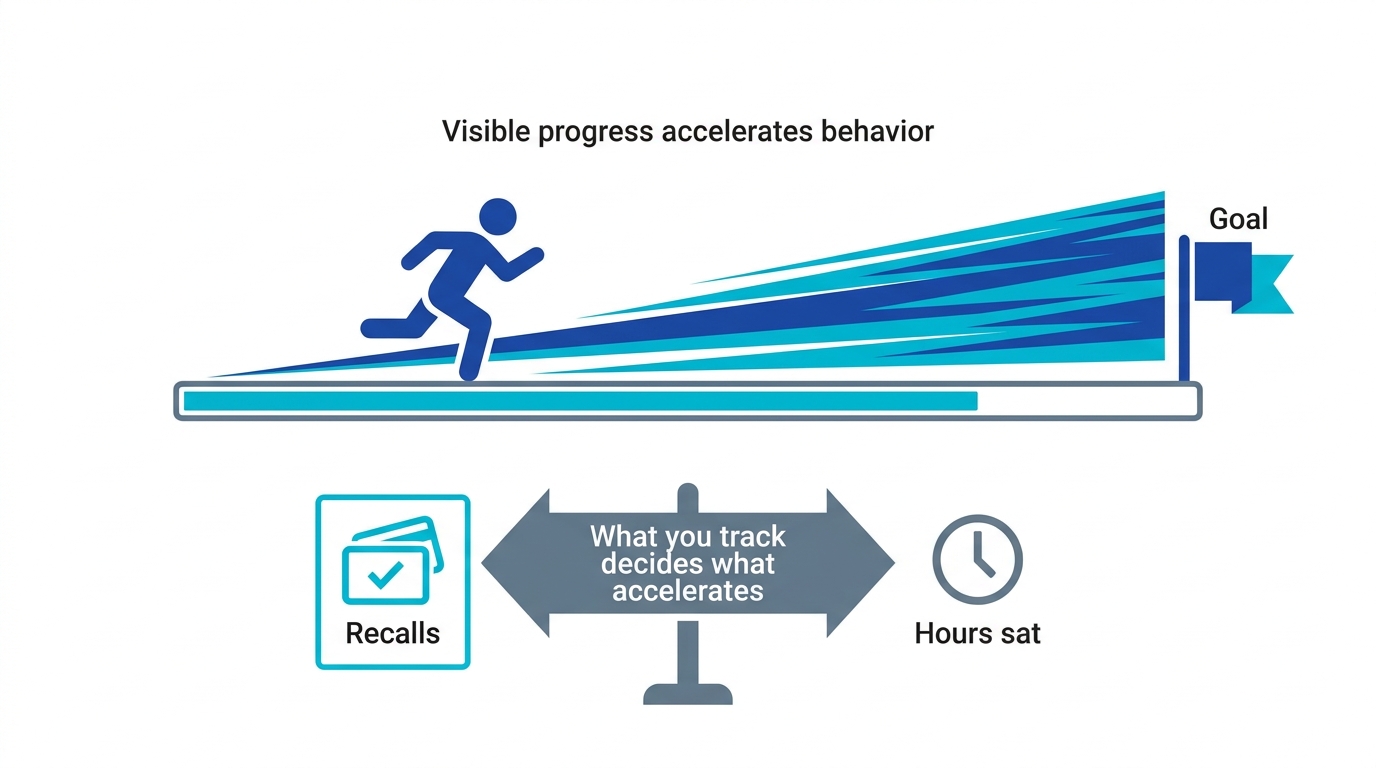
The pull of a visible record is real. When progress is displayed, people speed up as the goal gets closer, the same way runners accelerate over the last kilometer. A visible streak or a filling bar genuinely drives behavior, which is why planners and trackers help so many people show up daily.
The catch: tracking accelerates behavior, but it does not aim it. In Dunlosky's 2013 review of study techniques, practice testing and spaced review rated highest while rereading rated low. So if your log celebrates three hours of rereading, the graph grows while the memory does not. You get faster at running in the wrong direction.
Hours, pages, and highlights are attendance metrics
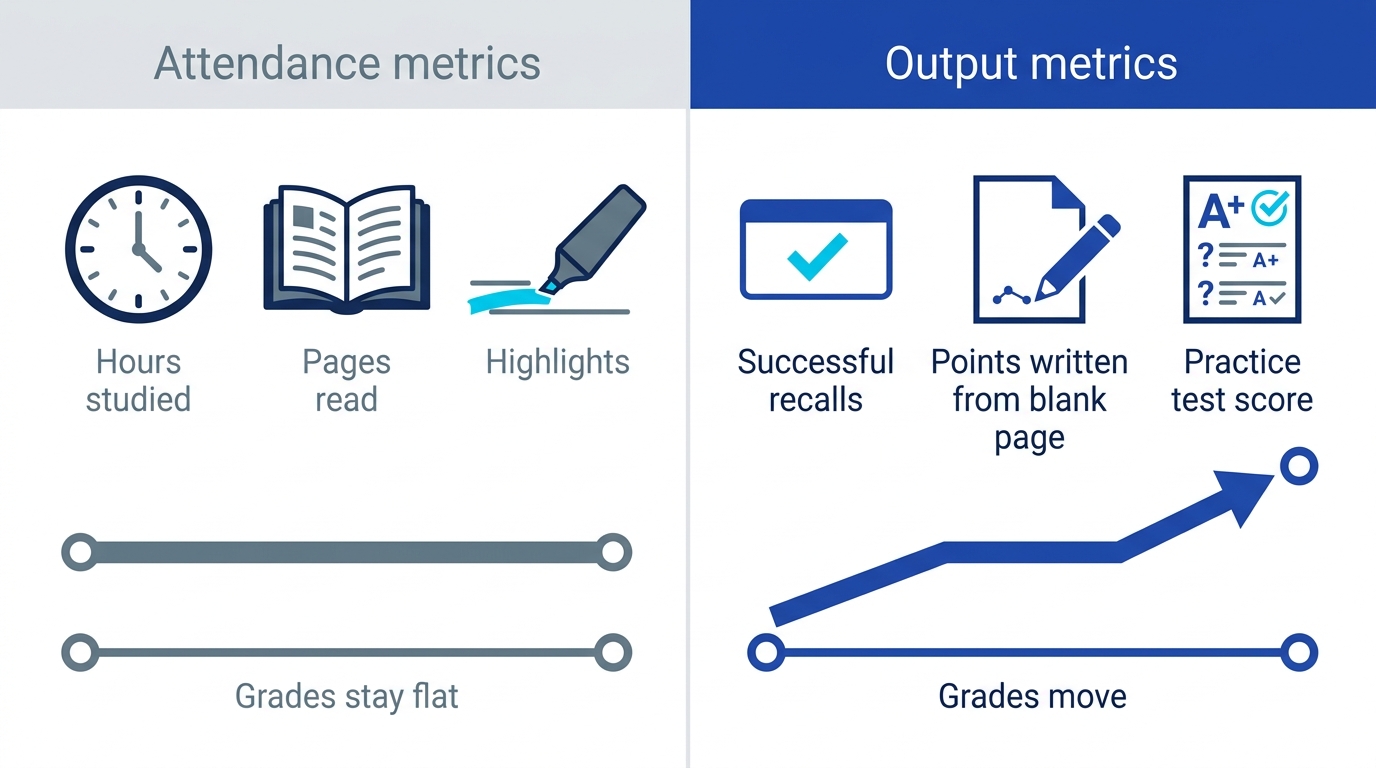
Study hours, pages read, highlights made: all three share one weakness. They only prove you were present. Three hours at the desk with zero retrieval attempts deposits nothing into memory. Twenty minutes with forty recall attempts moves it measurably.
| Skip tracking these (attendance) | Track these instead (output) |
|---|---|
| Hours studied | Cards recalled successfully |
| Pages read | Key points written from a blank page |
| Amount highlighted | Practice test scores and what you missed |
| How full the planner looks | Whether yesterday's misses became today's wins |
The bottom row is the one to steal first. Whether yesterday's misses became today's wins is the only entry there that changes what you do tomorrow. If you are putting in the hours and the grades still will not move, your log is probably full of the column on the left. We break down that whole failure pattern in Studying Hard but Not Improving?.
When the planner becomes the procrastination
There is a second trap, and it is a gentle one: record keeping feels good. Choosing pen colors, ruling neat boxes, decorating the spread. A beautiful planner page delivers a real sense of accomplishment, but honestly examined, it is preparation and reflection, not studying. On a hard day, thirty minutes of planner decorating can leave you feeling productive with zero retrieval attempts made.
No shame in it; escaping into a pleasant task is what brains do when starting feels heavy. The fix is a simple cap: three minutes a day covers everything a planner needs to say. If starting is the hard part, the deeper fix is shrinking the first action itself, covered in Why You Can't Start Studying.
Only two things are worth writing by hand
- Tomorrow's first action: not "study biology" but "answer 20 due cards." Tomorrow starts without a decision.
- Today's misses: the items you failed to recall or lost points on. That list is tomorrow's study material.
Both entries share a purpose: they manufacture tomorrow's behavior. A log that exists to be admired is a scrapbook; a log that decides your next move is a system. Thinking this way shrinks the writing to almost nothing.
Your review log already exists, and FSRS keeps it
Which card, on which day, recalled or missed: this is the record that actually predicts grades, and it is hopeless to keep by hand. In Memly, the FSRS spaced repetition algorithm logs every single review automatically and uses it to schedule the next one. The most valuable study record you could keep is already being kept for you.
- Today's queue builds itself: no reviewing the log to plan reviews; due cards simply appear.
- Misses come back sooner automatically: the algorithm is your error notebook.
- Materials become cards in seconds: photos, PDFs, and text are converted by AI, so your time goes to retrieval, not admin.
For how many recalls it actually takes to make something stick, see How Many Times Do You Need to Review?, and for the full picture of AI-assisted memorization, see the pillar guide AI-Assisted Memorization: How It Works and the Best Tools.
Tonight, write exactly one line
Most people who read this will log their hours again tomorrow, because a rising graph feels wonderful. That weekly bar chart will keep climbing either way. The only open question is whether the score next to it climbs with it.
So tonight, write one line in the planner: "First action tomorrow: answer 20 cards." Let the hours go untracked. The recalls, Memly counts for you, free to try, no credit card required.
