


When a new semester starts, several jobs arrive together: new lessons, assignments, and material you want to retain from the summer. A short reset can make that load easier to manage. Use the first two weeks, or the next two if classes have already started, to check older knowledge and establish a review routine.
The good news is that those first two weeks are the one stretch of the semester when everyone still has slack. Two jobs fit inside that slack: rescue your summer knowledge, and install your semester rhythm.
The short version: week 1 is a rescue week, where you re-test everything you learned over the summer instead of rereading it. Week 2 is when you install the ten-minute lecture-day carding habit, before assignments pile up. Only habits built in easy weeks survive the hard weeks.
Why the first two weeks decide the semester
Mid-semester is the worst possible time to start a new habit: lectures, assignments, quizzes, work, and clubs are all competing for the same attention. The opening two weeks are different. Content is still shallow, deadlines are far away, and your margin for installing new behavior is the largest it will ever be. If you install nothing, the default takes over: drifting from deadline to deadline until finals panic.
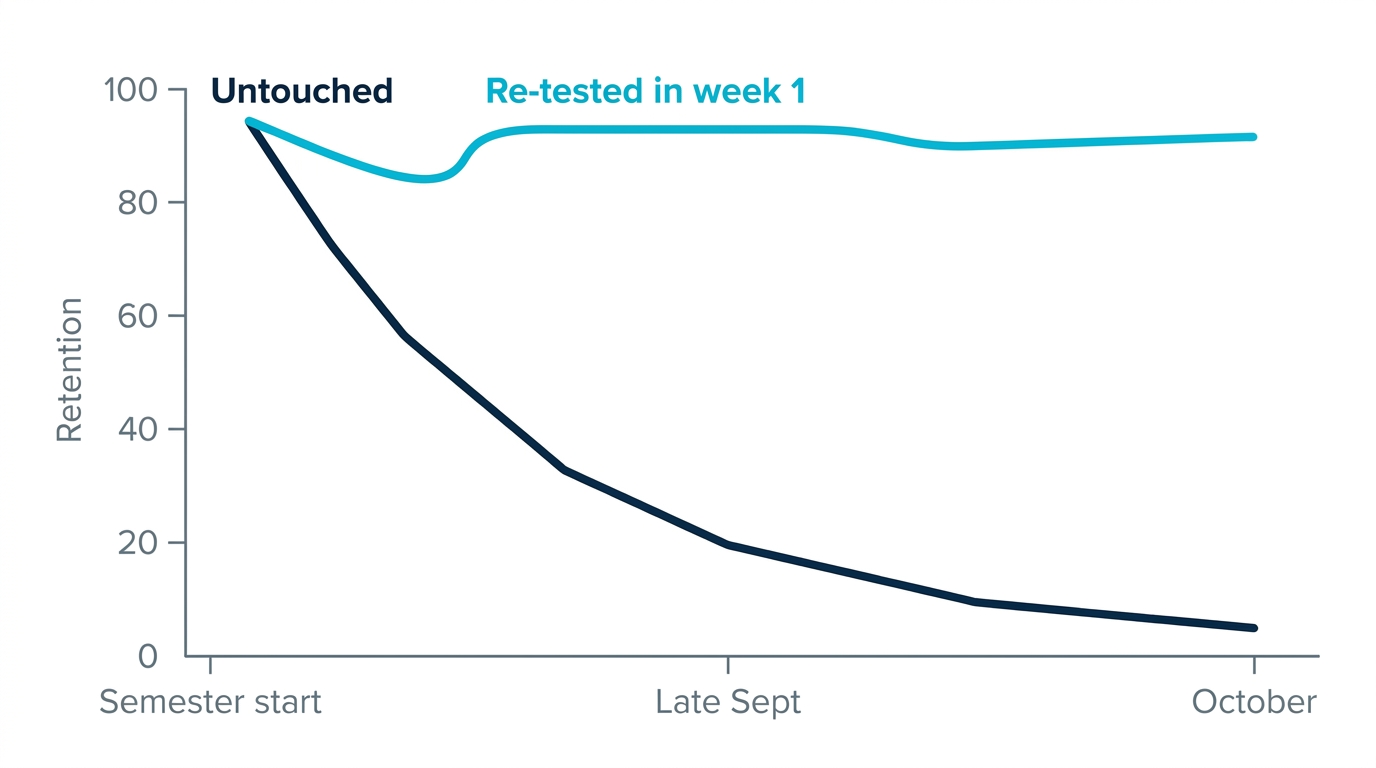
The second reason is forgetting. As Ebbinghaus's forgetting curve shows, memory that is not reviewed decays fast. The vocabulary and concepts you studied all summer will mostly vanish by October if September passes without a single recall attempt. Whether your summer effort turns into grades is decided now.
Week 1: rescue summer knowledge by re-testing it
The job is simple: test yourself on the summer material instead of rereading it. Open the cards or materials from summer and check, without looking at answers, what you can still produce. What you recall goes back to maintenance on longer intervals; what you miss re-enters the review rotation.
The trap to avoid is slipping back into rereading. Text that reads smoothly feels known, but recognizing and recalling are different abilities (the gap is covered in Why You Forget What You Read). Only a test separates knowledge that survived the summer from knowledge that is quietly dying. If you ran the summer card-based study plan, this rescue week is nothing more than clearing your daily reviews.
- 15-20 minutes a day for 7 days: split the summer material and re-test a slice each day.
- Recalled items: leave them alone; spaced repetition maintains them.
- Missed items: turn them into cards (if they are not already) and put them back in rotation.
Week 2: install the ten-minute lecture-day habit
Week 2 has one job: before the semester's real volume arrives, fix the habit of converting each lecture's notes or slides into flashcards on the same day. The workflow is the one we detailed in Turn Lecture Notes and Slides into Flashcards: photograph or upload, let AI generate the question-and-answer cards, skim the result. Ten minutes.
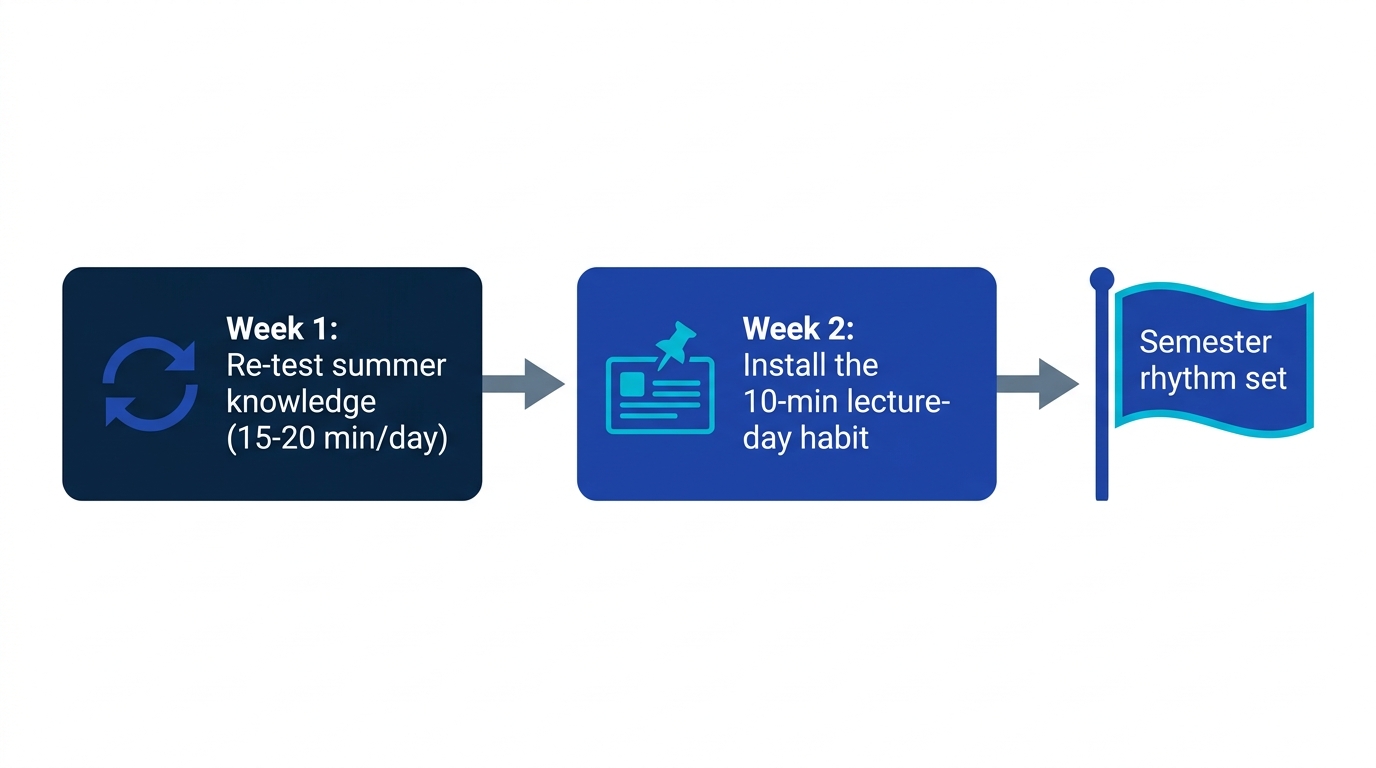
Why insist on week 2? Habits do not survive because you are disciplined; they survive because they accumulated repetitions while life was easy. Starting a new routine during midterm chaos is nearly impossible; continuing an already-running one is easy. The first two weeks are your runway.
What the semester looks like after setup
Two weeks of setup buys a week that looks like this, from October through finals.
| When | What | Time |
|---|---|---|
| Lecture day | Card the notes or slides, skim the result | 10 min |
| Weekday gaps | Answer due cards (summer cards resurface here too) | 5-10 min |
| Weekend | Clear the week's reviews; reopen slides only for misses | 15 min |
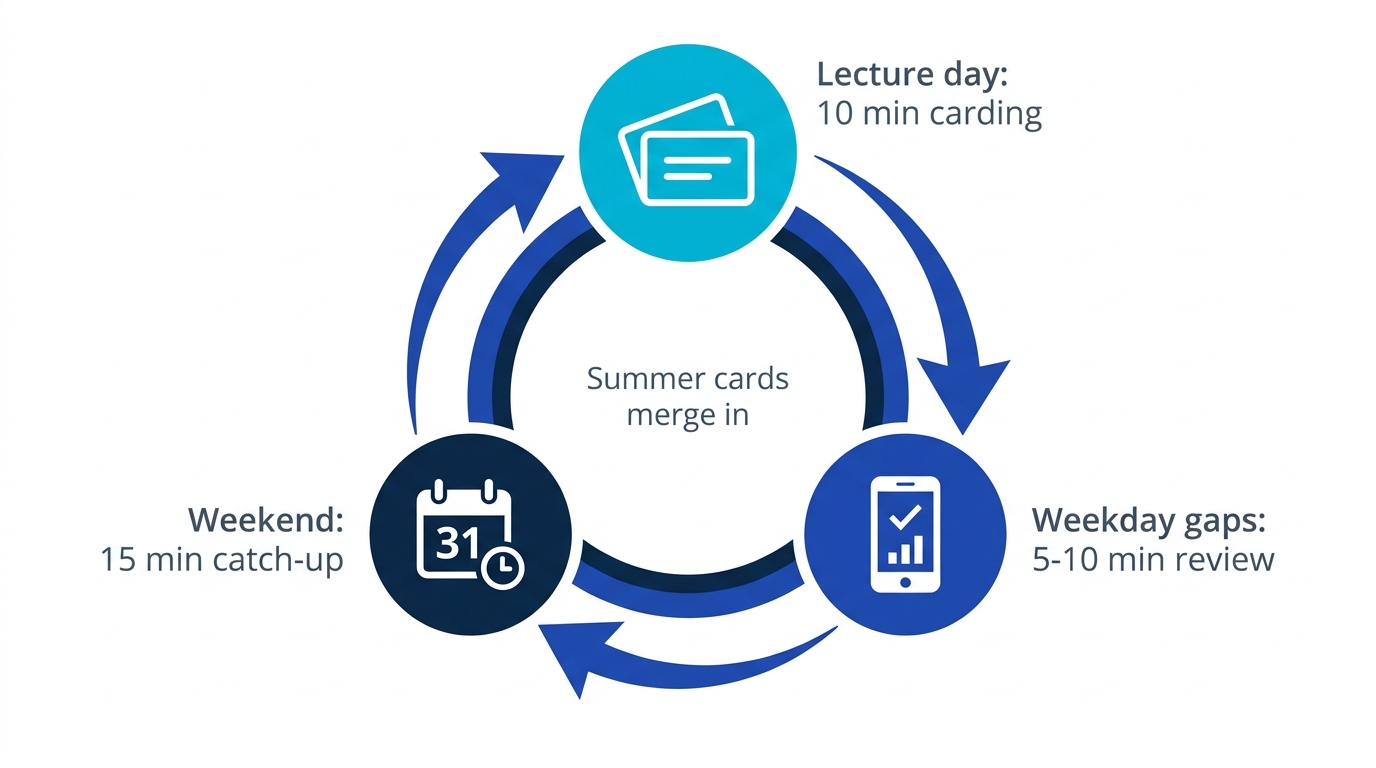
The strength of this loop is that summer knowledge and new semester knowledge merge into a single review stream. You never have to decide what to review when; the spaced repetition algorithm handles it. The timing principle is explained in The Best Time to Review: Right Before You Forget.
Memly handles both the rescue and the routine
- Summer rescue: photograph the textbooks and handouts you used this summer, and AI turns them into Q&A cards; the re-testing is just your daily review queue.
- The ten-minute habit: cards generate from note photos, slide PDFs, or pasted text.
- Review on autopilot: the FSRS spaced repetition algorithm surfaces whatever is about to be forgotten, summer and semester material alike, on Web, iOS, and Android.
For the full picture of AI-assisted memorization, see the pillar guide AI-Assisted Memorization: How It Works and the Best Tools.
The first week of the semester never comes back
If the semester is already underway, use the same two-week reset from where you are now. Pick one course, check what you still remember from the summer, and choose a regular review slot. You do not need to catch up on everything before starting.
Drift into the semester, or set it up first. One action is enough: today, re-test yourself on a single page of what you studied this summer. Whatever you fail to recall is exactly the savings worth rescuing this week. Memly is free to try, no credit card required.
